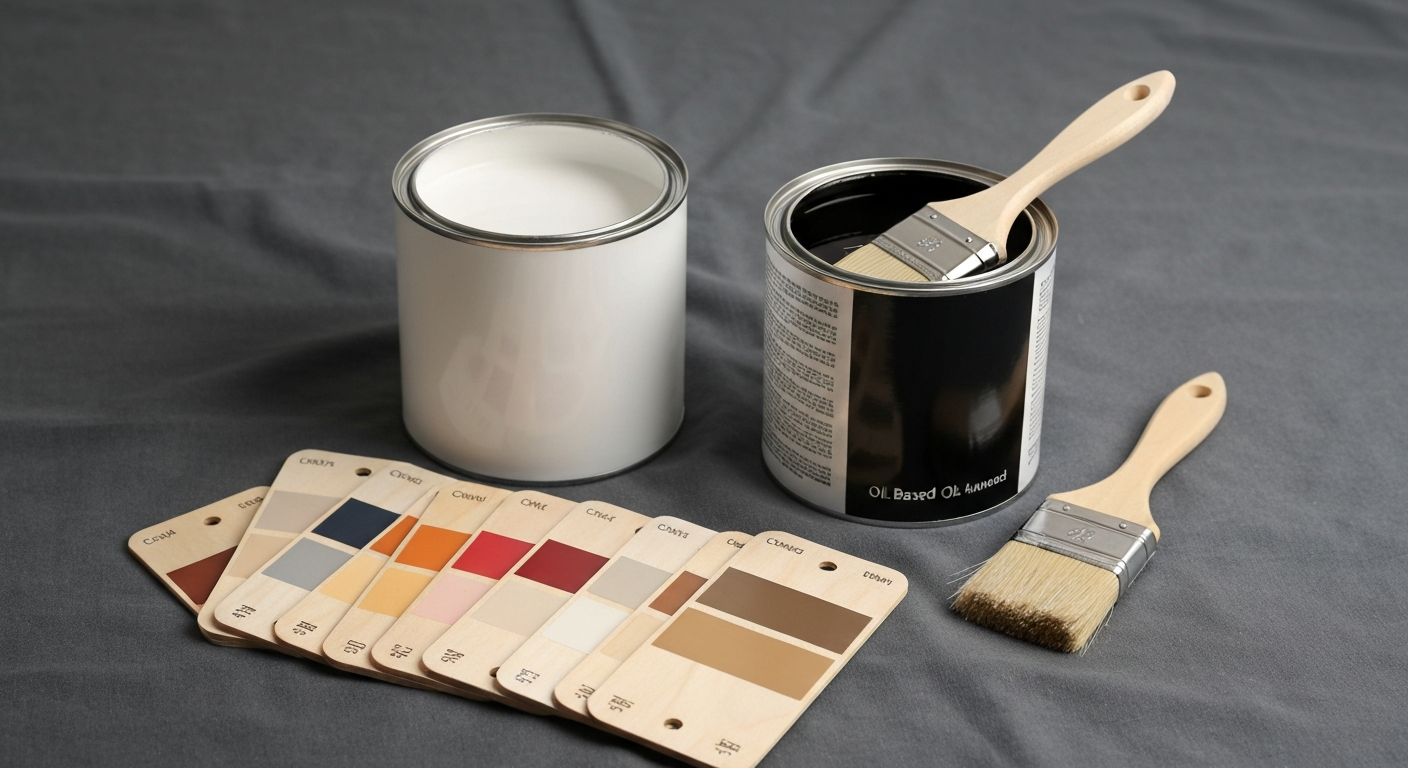
Latex Paint vs Oil-Based Paint: Which Should You Use?
A detailed comparison of Latex (Water-Based) Paint and Oil-Based Paint. Learn the key differences, pros and cons, and which one is right for you.
 Build Coded Editorial
 Choosing the right paint for your project is one of the most critical decisions you’ll make, often determining the longevity, aesthetic appeal, and even the ease of your painting journey. For decades, the debate between latex (water-based) and oil-based paint has been a cornerstone of home improvement discussions. While both serve the fundamental purpose of coating a surface with color and protection, they achieve this through vastly different chemical compositions, leading to distinct performance characteristics, application methods, and ideal use cases. Understanding these differences isn’t just about picking a color; it’s about making an informed choice that aligns with your project’s demands, your personal preferences, and the desired outcome. Let’s dive deep into the world of these two paint titans to help you decide which one will best bring your vision to life.
What is Latex (Water-Based) Paint?
Latex paint, often referred to as water-based paint, is the most popular choice for homeowners and professionals alike, and for good reason. Its primary solvent is water, which makes it incredibly user-friendly and environmentally conscious. The paint consists of pigment particles suspended in a binder (typically acrylic, vinyl, or a blend) and water. As the water evaporates, the binder particles coalesce, forming a durable, flexible film that adheres to the surface.
Modern latex paints have come a long way from their early formulations. Today’s acrylic latex paints, in particular, offer exceptional durability, adhesion, and resistance to fading and cracking, making them suitable for a vast array of interior and exterior applications. They are renowned for their quick drying times, which means you can often apply a second coat within a few hours, significantly speeding up project completion. This rapid drying also minimizes the risk of dust and debris settling into wet paint.
One of the most appealing aspects of latex paint is its ease of cleanup. Brushes, rollers, and spills can typically be cleaned with just soap and water, eliminating the need for harsh chemical solvents. Furthermore, latex paints generally have lower Volatile Organic Compound (VOC) levels compared to their oil-based counterparts, resulting in less odor and a healthier indoor air quality during and after application. This makes them ideal for occupied homes and spaces where strong fumes are a concern.
Latex paint’s inherent flexibility is another significant advantage. It can expand and contract with temperature fluctuations without cracking or peeling, making it excellent for exterior surfaces exposed to varying weather conditions, as well as interior walls that might experience minor settling or movement. This flexibility also contributes to its resistance to chalking and blistering over time. While traditionally not as hard-wearing as oil paint, advancements in acrylic technology have produced latex paints that are remarkably scuff-resistant and washable, making them suitable for high-traffic areas like hallways and children’s rooms.
Common uses for latex paint include:
- Interior Walls and Ceilings: The most common application due to ease of use, low odor, and quick drying.
- Exterior Siding and Trim: Its flexibility and weather resistance make it ideal for protecting against the elements.
- Decks and Porches: Specific formulations are designed for these demanding surfaces.
- Masonry and Stucco: Adheres well to porous surfaces.
- Furniture (with proper primer): Increasingly used for upcycling projects.
What is Oil-Based Paint?
Oil-based paint, traditionally made with alkyd (synthetic resin) or natural oils (like linseed oil) as the binder and mineral spirits or paint thinner as the solvent, has been the workhorse of the painting world for centuries. It’s known for creating an incredibly hard, durable, and smooth finish that can withstand significant wear and tear. Unlike latex paint, where water evaporates, oil-based paint cures through a process of oxidation, where the oils in the paint react with oxygen in the air to form a solid, tough film. This curing process is much slower than the drying of latex paint, often taking 6-8 hours or more between coats, and several days to fully cure.
The defining characteristic of oil-based paint is its exceptional durability and hardness. Once fully cured, it forms a very tough, chip-resistant surface that holds up remarkably well in high-traffic areas, making it a traditional favorite for trim, doors, and cabinets. It also boasts superior leveling properties, meaning brush strokes tend to flow out and disappear as the paint dries, resulting in an exceptionally smooth, glass-like finish that is difficult to achieve with latex paints. This self-leveling quality is highly prized by professional painters for achieving a flawless look on detailed woodwork.
Oil-based paint also offers excellent adhesion, particularly to challenging surfaces like bare wood, previously painted oil-based surfaces, and certain metals without extensive priming. Its robust nature makes it resistant to stains and moisture, providing a protective barrier that is easy to clean.
However, oil-based paint comes with several significant drawbacks. The most noticeable is its strong, lingering odor due to high levels of Volatile Organic Compounds (VOCs). Proper ventilation is absolutely crucial during application and for days afterward. Cleanup requires harsh solvents like mineral spirits or paint thinner, which can be messy and require proper disposal. The slow drying time, while contributing to its smooth finish, can be inconvenient, extending project timelines and leaving surfaces vulnerable to dust and smudges for longer.
Another historical concern with oil-based paints, especially lighter colors, is their tendency to yellow over time, particularly in areas with low light exposure. This yellowing is a natural part of the oxidation process. Furthermore, as oil paint ages, it tends to become brittle, which can lead to cracking and chipping on surfaces that experience expansion and contraction.
Due to environmental regulations and the rise of high-performance latex alternatives, the availability and use of traditional oil-based paints have decreased, especially for general interior wall applications. Many manufacturers now offer “waterborne alkyds” or “oil-modified urethanes” which attempt to combine the best properties of both types, offering the hardness and leveling of oil with the cleanup and lower VOCs of water-based paints.
Common uses for oil-based paint include:
- Doors, Trim, and Cabinets: Where extreme durability, a hard finish, and smooth leveling are desired.
- Furniture: For a tough, long-lasting finish.
- Metal Surfaces: Excellent adhesion and rust resistance (with proper preparation and primer).
- Floors: Certain formulations are designed for floor coatings.
- High-Moisture Areas (historically): Though modern latex paints have closed this gap.
Latex vs. Oil-Based Paint: A Head-to-Head Comparison
| Feature | Latex (Water-Based) Paint | Oil-Based Paint |
|---|---|---|
| Solvent/Cleanup | Water; easy cleanup with soap and water | Mineral spirits or paint thinner; difficult cleanup |
| Drying Time | Fast (1-2 hours dry-to-touch, 2-4 hours recoat) | Slow (6-8+ hours dry-to-touch, 24+ hours recoat) |
| Curing Time | Days to weeks for full hardness | Weeks to months for full hardness |
| Durability | Good to excellent; flexible, resists cracking/peeling | Excellent; very hard, chip-resistant, smooth finish |
| Flexibility | High; expands and contracts well with temperature changes | Low; becomes brittle with age, prone to cracking/chipping |
| Odor/VOCs | Low odor, generally low VOCs (many zero-VOC options) | Strong, lingering odor, high VOCs (traditional formulations) |
| Adhesion | Good; excellent on porous surfaces, can struggle on glossy | Excellent; superior on challenging or previously oiled surfaces |
| Yellowing | Does not yellow over time | Prone to yellowing, especially in low-light areas |
| Application | Applies easily, quick dry can show brush marks | Applies smoothly, excellent self-leveling, hides brush marks |
| Maintenance | Easy to clean, washable, touch-ups blend well | Easy to clean, very durable, touch-ups can be noticeable |
| Environmental | More environmentally friendly | Less environmentally friendly, requires special disposal |
Key Differences Detailed
While the table offers a concise overview, let’s elaborate on these critical distinctions to fully grasp their implications for your projects.
Drying Time and Curing Process
This is perhaps the most significant practical difference. Latex paint dries by evaporation of water, making it dry to the touch in as little as 30 minutes to an hour, and ready for a second coat in 2-4 hours. This rapid turnaround is a massive advantage for large projects or when you need to quickly return a room to use. However, “dry-to-touch” is not “cured.” Curing is the process where the paint film hardens completely, reaching its maximum durability. For latex, this can take several days to a few weeks.
Oil-based paint, on the other hand, dries through a chemical reaction called oxidation. This process is much slower, often requiring 6-8 hours or more before it’s dry to the touch, and a full 24 hours or more before a second coat can be applied. Full curing for oil paint can take weeks or even months. While this slow drying can be inconvenient, it allows the paint more time to “level out,” resulting in that signature ultra-smooth finish without visible brush strokes.
Cleanup and Odor
Latex paint’s water-based nature makes cleanup a breeze. Brushes, rollers, and spills can be cleaned with warm water and soap. This not only simplifies the process but also eliminates the need for harsh chemicals, making it safer for the environment and for the person doing the cleaning. The odor from latex paint is typically mild and dissipates quickly, especially with low-VOC or zero-VOC formulations, making it ideal for interior use in occupied homes.
Oil-based paint requires mineral spirits or paint thinner for cleanup. These solvents have strong fumes and are flammable, requiring careful handling and proper ventilation. Disposing of solvent-soaked rags and leftover thinner also requires adherence to local hazardous waste guidelines. The strong, lingering odor of oil paint, due to its high VOC content, can persist for days or even weeks, necessitating excellent ventilation during and after application.
Durability and Finish
Historically, oil-based paint was the undisputed champion of durability, known for its rock-hard, chip-resistant finish. It creates a tough, protective shell that stands up exceptionally well to bumps, scuffs, and heavy use, making it ideal for trim, doors, and cabinets. Its self-leveling properties also contribute to a very smooth, often glass-like finish that is difficult to replicate with latex.
Modern latex paints, particularly high-quality acrylic formulations, have significantly narrowed this gap. They offer excellent durability, scuff resistance, and washability. While they may not achieve the exact same “glass-smooth” finish as oil due to faster drying, they offer a degree of flexibility that oil paint lacks. This flexibility allows latex to expand and contract with the substrate (e.g., wood, drywall) without cracking or peeling, making it superior for exterior applications or surfaces prone to movement.
Flexibility and Cracking
This is a critical distinction. Latex paint remains somewhat flexible even after curing. This elasticity allows it to stretch and move with the surface it’s applied to, making it highly resistant to cracking, peeling, and blistering, especially on exterior surfaces exposed to temperature extremes or on new construction that might settle.
Oil-based paint, as it ages, becomes increasingly brittle. While initially incredibly hard, this lack of flexibility means it can crack, chip, and flake when the underlying surface expands or contracts, or when subjected to impact. This is why you might see old oil-painted trim or doors with a network of fine cracks.
Adhesion
Oil-based paint generally boasts superior adhesion, particularly to challenging surfaces like bare wood, previously oiled surfaces, and certain metals. Its penetrating nature allows it to bond deeply, providing an excellent foundation.
Latex paint has good adhesion but can sometimes struggle on very glossy, non-porous surfaces or over existing oil-based paint without proper surface preparation (sanding and priming). However, advancements in latex technology have led to “bonding primers” that significantly improve latex adhesion to tricky substrates.
Yellowing
A well-known characteristic of oil-based paint, especially lighter colors, is its tendency to yellow over time. This is a natural part of the oxidation process and is more pronounced in areas with low light exposure. What starts as a crisp white can eventually turn into a creamy or even yellowish hue.
Latex paint does not yellow. Its color remains true over its lifespan, making it the preferred choice for white ceilings, trim, and any area where maintaining a consistent, bright color is paramount.
Environmental Impact and VOCs
Traditional oil-based paints typically contain high levels of VOCs, which are chemicals that evaporate into the air and can contribute to smog and health issues. While regulations have led to lower-VOC oil paints, they generally still contain more than latex.
Latex paints are inherently lower in VOCs, and many manufacturers offer low-VOC and zero-VOC options. This makes latex a much more environmentally friendly choice and a healthier option for indoor applications, reducing respiratory irritation and chemical sensitivity concerns.
Who Should Choose Latex (Water-Based) Paint?
Latex paint is the go-to choice for the vast majority of painting projects today, catering to both DIY enthusiasts and professionals seeking efficiency and versatility.
You should choose latex paint if:
- You’re painting interior walls and ceilings: Its low odor, quick drying time, and easy cleanup make it ideal for living spaces, bedrooms, and offices. You can often complete a room in a single day.
- You’re painting exterior surfaces: Its flexibility and resistance to cracking, peeling, and blistering make it perfect for siding, trim, fences, and decks that are exposed to varying weather conditions.
- You prioritize ease of cleanup: A simple wash with soap and water for brushes and spills saves time and avoids the need for harsh chemicals.
- You’re sensitive to strong odors or concerned about indoor air quality: Low-VOC and zero-VOC latex options are much healthier for occupants and the environment.
- You need to complete a project quickly: The fast recoat time allows for multiple coats in a single day, significantly shortening project timelines.
- You want your paint color to remain true: Latex paint does not yellow over time, preserving the intended aesthetic.
- You’re a DIY homeowner: Its forgiving nature, easy application, and simple cleanup make it very user-friendly. For tips on getting a perfect finish, check out our guide on Prepping Your Walls for a Flawless Paint Job.
Who Should Choose Oil-Based Paint?
Despite the rise of latex, oil-based paint still holds a crucial niche where its unique properties are indispensable.
You should choose oil-based paint if:
- You require ultimate durability and a hard, chip-resistant finish: This makes it ideal for high-traffic areas like doors, window sills, baseboards, and cabinets that take a lot of abuse.
- You desire a perfectly smooth, glass-like finish: Its superior self-leveling properties excel at hiding brush strokes, creating a professional, factory-like appearance on intricate woodwork and furniture.
- You’re painting bare wood or previously oiled surfaces: Oil paint’s excellent adhesion and penetrating qualities make it a superb choice for these substrates, often requiring less extensive priming.
- You’re painting metal surfaces: Oil-based paints, especially those formulated with rust inhibitors, offer excellent protection and adhesion to metal.
- You’re an experienced painter: The longer drying time and solvent cleanup require more patience and skill, but the results can be exceptionally rewarding.
- You’re working on specific furniture refinishing projects: For antique pieces or furniture that will see heavy use, oil-based paint can provide an unparalleled level of protection and a beautiful, lasting finish.
Can You Use Both?
Absolutely! In fact, using both latex and oil-based paints (or primers) on the same project is a common and often recommended practice, leveraging the strengths of each. The key is understanding compatibility and proper preparation.
Here are common scenarios and considerations:
-
Oil-Based Primer, Latex Topcoat: This is a fantastic combination, especially for challenging surfaces. An oil-based primer (often shellac-based for best results) can be used to:
- Block stains: It’s excellent at sealing in water stains, smoke damage, or wood tannins that might bleed through latex topcoats.
- Improve adhesion on glossy surfaces: If you’re painting over old, glossy oil paint, an oil-based primer provides a “toothy” surface for latex to adhere to, preventing peeling.
- Provide superior adhesion to bare wood or metal: The oil primer creates a robust foundation.
- Once the oil-based primer is fully dry (check manufacturer recommendations, often 24 hours), you can confidently apply one or two coats of latex paint as your finish. This gives you the benefits of oil’s adhesion and stain-blocking, combined with latex’s easy cleanup, low odor, and non-yellowing topcoat.
-
Latex Over Oil (Directly): This is generally NOT recommended without proper preparation. Applying latex paint directly over an existing oil-based finish can lead to poor adhesion, peeling, and flaking because latex struggles to bond to the hard, smooth surface of cured oil paint.
- The solution: Thoroughly clean the existing oil-based paint, then sand it to dull the sheen and create a “tooth” for the new paint to grip. After sanding, apply a high-quality bonding primer (either a water-based bonding primer or an oil-based primer as mentioned above). Once the primer is dry, you can apply your latex topcoat.
-
Oil Over Latex (Directly): This is also generally NOT recommended. While less prone to immediate peeling than the reverse, applying oil paint over a flexible latex finish can lead to cracking and delamination as the brittle oil paint ages and the flexible latex underneath moves.
- The solution: If you absolutely must apply oil paint over latex, ensure the latex is fully cured and clean. Lightly sand the latex for better adhesion, and then apply an oil-based primer specifically designed for such transitions. This creates a stable base for the oil topcoat. However, due to the inherent flexibility difference, this combination can still be problematic long-term.
Key takeaway for using both: Always use a primer designed for compatibility when transitioning between paint types. Read the manufacturer’s instructions carefully for both your primer and topcoat to ensure proper adhesion and performance. Understanding paint finishes, and how they interact, is crucial for a lasting result – learn more in our article, Mastering Interior Paint Finishes: A Comprehensive Guide.
Our Verdict
The choice between latex and oil-based paint is no longer a simple matter of one being inherently “better” than the other. Instead, it’s about selecting the right tool for the job, understanding the unique demands of your project, and aligning those with the distinct properties of each paint type.
For the vast majority of modern home painting projects – particularly interior walls, ceilings, and most exterior surfaces – latex (water-based) paint is the clear winner. Its ease of use, quick drying time, low odor, easy cleanup, and environmental benefits make it the practical, user-friendly, and increasingly durable choice. Advancements in acrylic latex technology have made these paints incredibly robust, capable of withstanding significant wear and tear without the drawbacks of traditional oil paints.
However, oil-based paint still reigns supreme in specific niches where its unparalleled hardness, superior leveling, and exceptional adhesion are non-negotiable. For interior trim, doors, cabinets, and furniture that demand an ultra-smooth, glass-like finish and ultimate chip resistance, oil-based paint (or modern waterborne alkyd alternatives) remains a top contender. Its ability to create a truly flawless, durable surface is hard to beat for these applications.
Ultimately, before you grab a brush, take a moment to assess: What surface are you painting? What kind of wear and tear will it endure? How quickly do you need the project done? How important are low odor and easy cleanup to you? By answering these questions, you’ll find that the “best” paint isn’t a universal truth, but rather the paint that perfectly suits your specific needs and helps you achieve a beautiful, long-lasting finish.
Related reading: