Orbital Sander vs Belt Sander: Which One Do You Need?
A detailed comparison of Random Orbital Sander and Belt Sander. Learn the key differences, pros and cons, and which one is right for you.
 Build Coded Editorial
 Choosing the right power sander can feel like navigating a dense forest of options, each promising to deliver the perfect finish. Among the most common and often confused are the random orbital sander and the belt sander. While both are designed to remove material and smooth surfaces, they are fundamentally different tools, engineered for distinct purposes. Understanding these differences isn’t just about knowing what each tool does; it’s about knowing which one will truly elevate your woodworking projects, save you time, and prevent costly mistakes. Let’s peel back the layers and uncover the true capabilities of these workshop workhorses, helping you decide which one deserves a spot in your arsenal – or perhaps both.
What is a Random Orbital Sander?
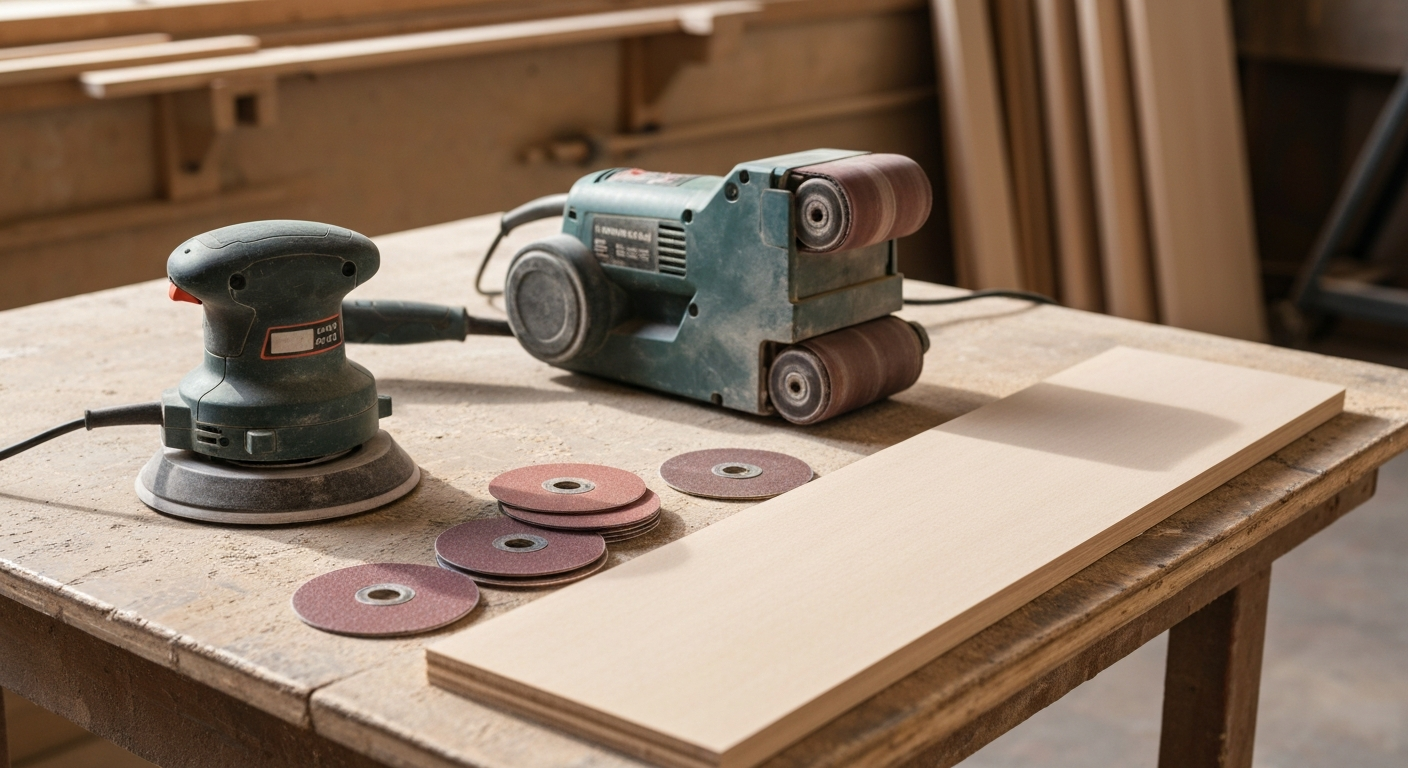
Imagine a sanding disc that not only spins but also moves in tiny, random ellipses. That’s the essence of a random orbital sander. This unique dual action is its defining characteristic, allowing it to remove material efficiently while simultaneously minimizing the dreaded swirl marks that plague traditional rotary sanders.
At its core, a random orbital sander consists of a circular sanding pad that rotates on its axis while simultaneously orbiting in a small, irregular pattern. This “random” movement ensures that no single abrasive particle follows the same path twice, preventing the formation of noticeable linear scratches or swirl patterns. The sanding discs, typically circular and ranging from 5 to 6 inches in diameter, attach to the pad using a hook-and-loop (Velcro-style) system, making grit changes quick and easy. Most models also feature integrated dust collection systems, either through a bag attached to the tool or a port for connecting to a shop vacuum, which significantly improves visibility and air quality.
Random orbital sanders are generally considered finish sanders, though they can handle a surprising amount of material removal with coarser grits. They excel at preparing surfaces for stains, paints, or clear coats, producing a smooth, uniform finish that is critical for high-quality woodworking. Their relatively gentle action makes them suitable for a wide range of materials, including wood, plastic, metal, and even composites. Many models come with variable speed controls, allowing you to adjust the aggressiveness of the sanding action to match the task at hand, from rapid stock removal with a coarse grit to delicate final smoothing with an ultra-fine grit.
The ergonomics of random orbital sanders are often designed for comfortable, one-handed operation, making them less fatiguing for prolonged use compared to their more aggressive counterparts. Their compact size and lighter weight also contribute to better control, especially when working on curved surfaces or in tighter spaces. From sanding cabinet doors and tabletops to smoothing out rough edges on smaller projects, the random orbital sander is an incredibly versatile tool that often becomes the go-to for many woodworkers seeking a pristine finish.
What is a Belt Sander?
If the random orbital sander is the finesse artist, the belt sander is the brute force workhorse. This tool is built for aggressive material removal, designed to tackle the toughest sanding jobs with speed and power. Unlike the random orbital sander’s circular disc, a belt sander utilizes a continuous loop of abrasive material – a sanding belt – that rotates rapidly between two drums.
The mechanism is straightforward: a motor drives one of the drums, pulling the sanding belt around in a continuous, unidirectional motion. The flat bottom surface of the tool, often called the platen, holds the belt against the workpiece. Belt sanders are characterized by their rectangular sanding surface and typically come in sizes like 3x18 inches, 3x21 inches, or 4x24 inches, referring to the width and length of the sanding belt. The larger the belt, generally the more powerful and capable the sander is for heavy-duty tasks.
Belt sanders are the champions of rapid material removal. They are indispensable for tasks such as leveling uneven surfaces, stripping old finishes, shaping wood, and dimensioning rough lumber. When you need to quickly take down a significant amount of material, flatten a bowed board, or prepare a surface that’s been heavily abused, a belt sander is often the fastest and most efficient choice. Their directional sanding action, however, means they can leave noticeable linear scratch marks, especially with coarser grits, making them generally unsuitable for final finishing work where a pristine, swirl-free surface is desired.
Due to their power and aggressive nature, belt sanders require a firm hand and careful control. If not handled properly, they can quickly remove too much material, create dips, or gouge the workpiece. Many models include features like belt tracking adjustments to keep the belt centered and prevent it from running off the drums, as well as dust collection systems to manage the substantial amount of sawdust they generate. While some belt sanders can be inverted and clamped to a workbench for stationary sanding tasks, their primary role is as a portable, handheld tool for large-scale, heavy-duty sanding operations. They are a staple in professional workshops, construction sites, and for anyone regularly working with rough lumber or large surfaces that require significant material removal.
Head-to-Head Comparison: Random Orbital Sander vs. Belt Sander
To truly understand which sander is right for your project, let’s put them side-by-side.
| Feature | Random Orbital Sander | Belt Sander |
|---|---|---|
| Material Removal Rate | Moderate to Low (depending on grit) | Very High (aggressive, fast) |
| Finish Quality | Excellent (smooth, swirl-free, ready for finish) | Poor for fine finish (leaves linear scratches) |
| Aggressiveness | Low to Moderate (less likely to gouge) | Very High (can remove material quickly, requires skill) |
| Best Use Cases | Fine finishing, general sanding, paint/varnish prep, curved surfaces, smaller projects | Heavy stock removal, leveling uneven surfaces, stripping old finishes, shaping, large flat surfaces, dimensioning rough lumber |
| Sanding Action | Random orbital (circular rotation + eccentric orbit) | Linear, unidirectional (continuous belt movement) |
| Ease of Use | Very easy to control, forgiving, good for beginners | Requires practice and control, aggressive, can damage workpiece if misused |
| Dust Collection | Generally effective for fine dust | Manages large volume of coarse dust, often requires robust system |
| Versatility | High (from roughing to fine finishing with grit changes) | Moderate (specialized for heavy removal, less for fine work) |
Key Differences Detailed
Delving deeper into the factors above will illuminate why these two sanders are fundamentally different tools for different jobs.
Material Removal Rate vs. Finish Quality
This is the most crucial distinction. A belt sander is designed for sheer power and speed in removing material. Its continuous, unidirectional belt, especially with coarser grits, can strip away significant amounts of wood, paint, or varnish in mere seconds. This makes it invaluable for tasks like flattening a severely warped board, quickly shaping a rough edge, or stripping multiple layers of old finish from a piece of furniture. However, this aggressive action comes at a cost: it leaves behind noticeable linear scratch marks. While these can be minimized with progressively finer grits, a belt sander will almost never achieve a finish fine enough for staining or clear coating without subsequent sanding.
The random orbital sander, by contrast, excels at producing a smooth, blemish-free surface. Its unique dual action – the spinning disc combined with an eccentric orbit – ensures that no single abrasive grain follows the same path twice. This random pattern effectively breaks up scratch patterns, virtually eliminating swirl marks and creating a uniform surface ideal for accepting a finish. While it can remove material, especially with coarse grits, it does so at a much slower pace than a belt sander. Its strength lies in its ability to refine a surface, not to aggressively reshape it.
Aggressiveness and Control
The sheer power of a belt sander demands respect and skill. It’s easy to remove too much material, create dips, or even gouge a workpiece if you’re not careful. The tool needs to be kept constantly moving and flat against the surface to avoid creating unevenness. Beginners often find belt sanders intimidating because of their potential to quickly cause irreversible damage. Mastering a belt sander involves learning to control its power, maintain even pressure, and guide it smoothly across the surface.
A random orbital sander is much more forgiving. Its less aggressive action means you have more time to react and correct your movements. It’s far less likely to gouge or damage a workpiece, even for inexperienced users. This makes it an excellent choice for beginners and for tasks where precision and a light touch are paramount. You can apply more pressure to speed up material removal, but even then, the risk of creating significant damage is relatively low compared to a belt sander.
Sanding Action and Scratch Patterns
The belt sander’s linear, unidirectional sanding action inherently creates linear scratch patterns. While these might not be visible on very rough lumber or if you’re painting over the surface, they will show up under stain or clear finishes. To mitigate this, you often have to follow up with a random orbital sander or hand sanding across the grain to break up those linear marks.
The random orbital sander’s random, eccentric motion is specifically designed to prevent visible scratch patterns. By constantly changing the direction of the abrasive, it effectively “confuses” the eye, leaving a surface that appears uniformly smooth. This makes it the preferred tool for all finishing stages of sanding, especially when preparing wood for a transparent finish where any scratch marks would be highlighted.
Versatility
While both tools are “sanders,” their versatility differs greatly. The random orbital sander is incredibly versatile for various stages of sanding after the initial heavy material removal. With a range of grits from 60 to 400+, it can take a somewhat rough surface to a perfectly smooth, finish-ready state. It’s also better suited for curved surfaces due to its circular pad. For a hobbyist or someone doing general woodworking, it’s often the first sander they reach for.
The belt sander is highly specialized for aggressive material removal. While it excels at its niche, it’s not the tool you’d use for fine detail work or for achieving a final, pristine finish. Its applications are more limited to the initial, heavy-duty stages of a project or for specific tasks like floor sanding or flattening large slabs.
Dust Collection
Both types of sanders typically come with dust collection capabilities, but the nature of the dust they produce differs. Belt sanders generate a large volume of coarse dust very quickly. Their dust collection systems need to be robust, and often connecting them to a dedicated shop vacuum is highly recommended for efficient dust management. The sheer amount of material removed means a small dust bag will fill up almost instantly.
Random orbital sanders produce finer dust, but still a significant amount, especially with coarser grits. Their integrated dust bags are often more effective for managing this finer dust, and connecting them to a shop vacuum further enhances performance, ensuring a cleaner workspace and better air quality. Effective dust collection is critical not just for health and cleanliness, but also because dust left on the workpiece can interfere with the sanding process, causing scratches. For more on managing sawdust and keeping your workshop clean, check out our guide on essential woodworking safety tips.
Who Should Choose a Random Orbital Sander?
A random orbital sander is an excellent choice for:
- Beginners and Hobbyists: Its forgiving nature and ease of use make it perfect for those new to woodworking or who only tackle projects occasionally. You’re less likely to make costly mistakes with this tool.
- Fine Woodworkers: If your projects demand a flawless, professional-grade finish – think furniture, cabinetry, or decorative items – the random orbital sander is indispensable. It’s the king of preparing surfaces for stain, paint, or varnish.
- General Household Use: For sanding down a door, refinishing a small table, preparing walls for paint, or smoothing out various surfaces around the house, its versatility shines.
- Those Working with Curved Surfaces: The circular pad and relative flexibility make it much more adaptable to contours and curves than a belt sander.
- Anyone Prioritizing Finish Over Speed: If the ultimate smoothness and absence of swirl marks are your primary concerns, this is your tool.
- Users of a Variety of Materials: From wood to plastic to metal, the random orbital sander is highly adaptable, provided you select the correct grit and speed. For guidance on selecting the right abrasive for your specific needs, explore our article on mastering different sanding grits.
Who Should Choose a Belt Sander?
A belt sander is the tool of choice for:
- Professionals and Experienced Woodworkers: Those who frequently work with rough lumber, large projects, or need to quickly remove a lot of material will find a belt sander invaluable. Their experience allows them to wield its power effectively.
- Heavy Stock Removal: If you’re milling rough lumber, dimensioning boards, or need to aggressively reshape a piece of wood, a belt sander is unmatched in speed and efficiency.
- Flattening Large, Uneven Surfaces: For bowed tabletops, uneven floorboards, or large panels that need to be brought to a consistent level, a belt sander can tackle the job far quicker than any other handheld sander.
- Stripping Old Finishes: When dealing with multiple layers of paint, varnish, or shellac, a belt sander with a coarse grit will make quick work of removal, saving you hours of scraping and chemical strippers.
- Floor Sanding: While specialized floor sanders exist, handheld belt sanders are often used for edges and smaller areas when refinishing hardwood floors.
- Speed Over Finish: If your priority is getting the job done fast and you’re not concerned about a pristine finish (perhaps you’re painting over it, or you’ll follow up with a random orbital sander), the belt sander is your go-to.
- Working with Tough, Resinous Woods: Some woods are particularly stubborn to sand; a belt sander’s power can cut through them more effectively. When selecting wood for such projects, understanding its properties is key. Learn more in our guide on choosing the right wood for your project.
Can You Use/Have Both?
Absolutely! In fact, for many serious woodworkers and even enthusiastic hobbyists, owning both a random orbital sander and a belt sander isn’t a luxury; it’s a necessity. These two tools are not interchangeable; rather, they are complementary. They each excel at different stages of the sanding process, making them a powerful duo in any workshop.
Think of it this way:
- Initial Aggressive Removal: You start with the belt sander to quickly remove rough material, flatten uneven surfaces, or strip old finishes. It does the heavy lifting, getting your workpiece into general shape and removing the bulk of imperfections.
- Refinement and Finishing: Once the belt sander has done its job, you switch to the random orbital sander. With progressively finer grits, it smooths out the linear scratches left by the belt sander, refines the surface, and prepares the wood for a beautiful, swirl-free finish.
Attempting to do heavy stock removal with a random orbital sander would be painstakingly slow and wear out countless sanding discs. Conversely, trying to achieve a fine, finish-ready surface with a belt sander would be an exercise in frustration, inevitably leaving behind visible scratches.
Having both tools allows you to tackle a wider range of projects more efficiently and achieve superior results. You can optimize each stage of your sanding process, saving time and producing a much higher quality final product. For anyone serious about woodworking, investing in both is a wise decision that will pay dividends in project quality and efficiency.
The Verdict
When it comes down to it, the choice between a random orbital sander and a belt sander isn’t about which one is “better” overall, but which one is better suited for the specific tasks you face most often.
If your projects primarily involve fine woodworking, furniture making, detailed finishing, or general household sanding where a smooth, swirl-free surface is paramount, then the random orbital sander should be your first choice. It’s versatile, user-friendly, and delivers excellent results for preparing surfaces for a professional-grade finish.
If you frequently deal with rough lumber, large surfaces, heavy material removal, stripping old finishes, or flattening significantly uneven boards, then the belt sander is the indispensable tool for you. It’s a powerhouse designed for speed and aggression, capable of tackling jobs that would overwhelm any other handheld sander.
For those who aspire to tackle a broad spectrum of woodworking projects, from rough construction to fine cabinetry, the ultimate verdict is clear: own both. They form a dynamic duo, each picking up where the other leaves off, ensuring that you have the right tool for every stage of your sanding process. Together, they empower you to work efficiently, effectively, and achieve truly professional results.
Related reading: Mastering Wood Finishes: A Beginner’s Guide Essential Woodworking Safety Tips for Your Workshop