Stepping into the world of woodworking and DIY, you’ll quickly discover a vast array of specialized tools designed to make specific tasks easier and achieve professional results. Among the most commonly discussed and often confused are the brad nailer and the finish nailer. Both are nail guns, both drive nails, and both are indispensable for certain types of projects. But using the wrong one can lead to frustration, damaged materials, or an unprofessional finish. Understanding the nuanced differences between an 18-gauge brad nailer and a 15- or 16-gauge finish nailer is crucial for any builder, remodeler, or hobbyist looking to elevate their craft. Let’s break down these essential tools, helping you decide which one (or both!) deserves a spot in your toolkit.
What is an 18-Gauge Brad Nailer?
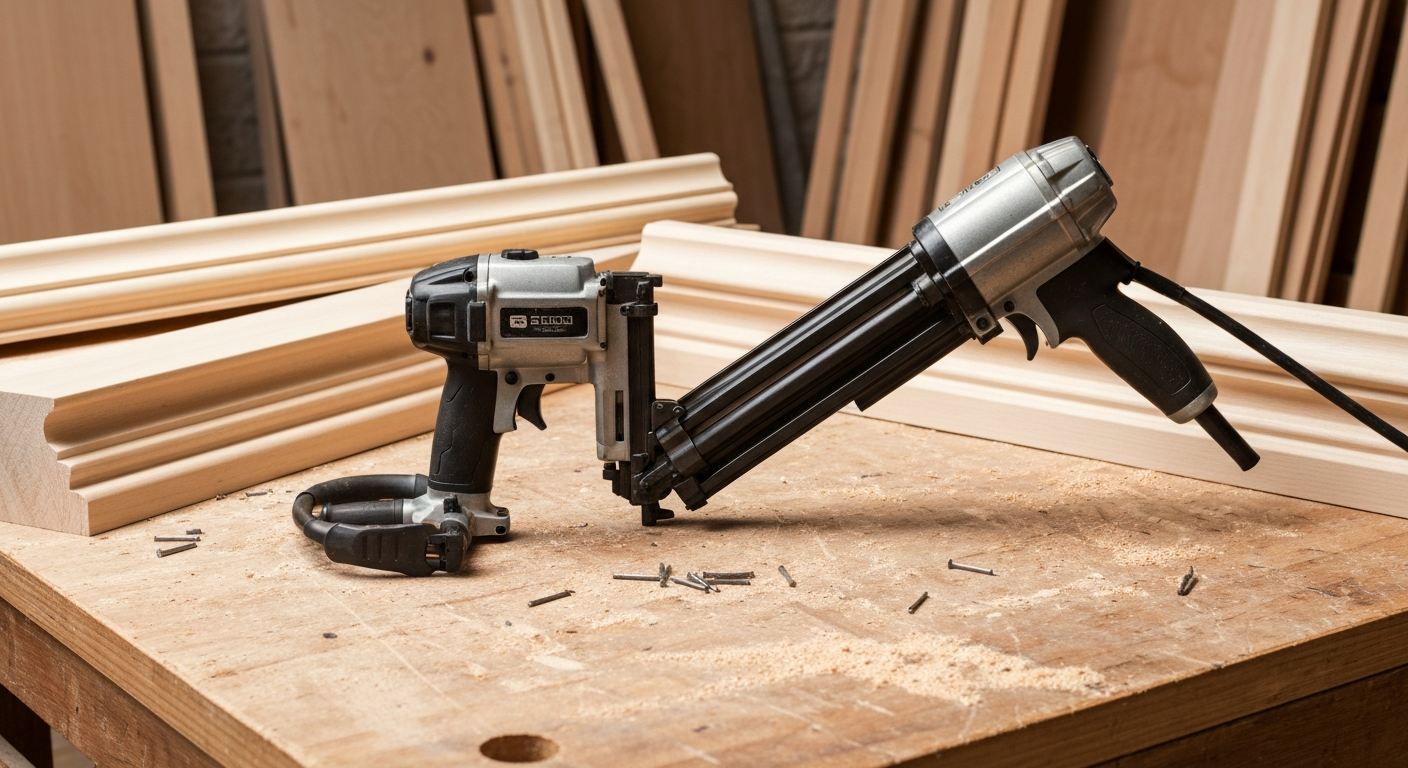
An 18-gauge brad nailer is a pneumatic or cordless tool designed to drive thin, small-headed nails known as “brads.” The “18-gauge” refers to the diameter of the nail – in the gauge system, a higher number indicates a thinner nail. So, 18-gauge brads are quite fine, typically ranging from 1/2 inch to 2 inches in length.
Brad nailers are celebrated for their ability to create nearly invisible holes. The slender brad nail leaves a tiny entry point, often so small that it doesn’t require wood putty or filler, especially when working with pre-finished materials or lighter-colored woods where filler might stand out. This makes them ideal for applications where aesthetics are paramount and strong holding power isn’t the primary concern.
Common Applications for an 18-Gauge Brad Nailer:
- Delicate Trim Work: Installing small baseboards, crown molding, window and door casings where minimal visual impact is desired.
- Decorative Molding: Attaching intricate trim pieces, chair rails, and picture frame molding.
- Craft Projects: Perfect for assembling birdhouses, small frames, and other light-duty woodworking projects.
- Temporary Fastening: Holding pieces in place while glue dries, especially useful for cabinet assembly or furniture repair.
- Paneling and Siding: Securing thin paneling or beadboard.
- Cabinetry: Attaching cabinet backs, face frames, and drawer slides where a strong hold isn’t needed, but a clean finish is.
Pros of an 18-Gauge Brad Nailer:
- Minimal hole size, often requiring no filling.
- Less likely to split delicate wood or thin materials.
- Lighter and more maneuverable than finish nailers.
- Generally more affordable.
Cons of an 18-Gauge Brad Nailer:
- Limited holding power due to the thin nails.
- Not suitable for structural applications or heavy materials.
- Nails can bend or deflect in very hard woods.
What is a 15- or 16-Gauge Finish Nailer?
A finish nailer, whether it’s a 15-gauge or 16-gauge model, is a more robust tool compared to its brad nailer counterpart. The “15-gauge” or “16-gauge” refers to the thicker diameter of its nails, which translates to significantly more holding power. These nails typically have a slightly larger, D-shaped or full round head, and they range in length from 1 inch up to 2 1/2 inches or even 3 inches.
The primary purpose of a finish nailer is to provide a strong, secure hold for heavier trim and molding, while still offering a relatively clean finish. While the holes left by a finish nailer are noticeably larger than those from a brad nailer, they are still small enough to be easily filled with wood putty and sanded smooth for a professional appearance. The choice between 15-gauge and 16-gauge often comes down to personal preference or the specific project. 15-gauge nails are slightly thicker and offer a bit more holding power, while 16-gauge nails are a hair thinner, leaving a marginally smaller hole. Both are considered “finish” nails.
Common Applications for a 15/16-Gauge Finish Nailer:
- Heavy Trim and Molding: Securing thick baseboards, crown molding, door and window casings that require a stronger, more permanent hold.
- Door and Window Jambs: Installing interior door frames and window sills.
- Cabinet and Furniture Assembly: Joining larger cabinet components, building sturdy furniture frames, and securing drawer boxes.
- Stair Treads and Risers: Fastening these elements securely to the stair stringers.
- Hardwood Flooring Starter Rows: While not for the entire floor, finish nailers can be used to blind nail the first few rows of tongue-and-groove flooring.
- Paneling and Wainscoting: Providing a secure hold for thicker wall panels.
Pros of a 15/16-Gauge Finish Nailer:
- Superior holding power for robust connections.
- Can handle thicker and heavier materials.
- Nails are less prone to bending or deflecting.
- Versatile for a wide range of interior finishing tasks.
Cons of a 15/16-Gauge Finish Nailer:
- Leaves a larger hole that typically requires filling.
- Can split delicate or very thin materials if not used carefully.
- Heavier and sometimes bulkier than brad nailers.
- Generally more expensive than brad nailers.
Brad Nailer vs. Finish Nailer: Head-to-Head Comparison
To help clarify the differences, here’s a direct comparison of key factors:
| Feature | 18-Gauge Brad Nailer | 15/16-Gauge Finish Nailer |
|---|---|---|
| Nail Gauge | 18-gauge (thinner nail) | 15-gauge or 16-gauge (thicker nail) |
| Nail Length | 1/2” to 2” | 1” to 2 1/2” (sometimes up to 3”) |
| Holding Power | Low to moderate | High to very high |
| Hole Size | Very small, often invisible, rarely needs filling | Noticeably larger, typically requires filling and sanding |
| Ideal Applications | Delicate trim, small moldings, craft projects, temporary fastening, thin paneling, cabinet backs | Heavy trim, baseboards, crown molding, door/window casings, furniture assembly, stair work, thicker paneling |
| Risk of Splitting | Very low, even on delicate wood | Moderate to high on delicate or thin materials if not careful |
| Tool Weight/Ergonomics | Lighter, more compact, easier to maneuver | Heavier, more robust, can be more cumbersome in tight spaces |
| Versatility | Limited to lighter applications | Broad range of interior finishing and light construction |
Key Differences Detailed
Let’s dive deeper into some of the critical distinctions that will influence your purchase decision.
Nail Gauge and Holding Power
This is the most fundamental difference. The gauge of a nail refers to its thickness. An 18-gauge nail is significantly thinner than a 15- or 16-gauge nail. This difference in thickness directly translates to holding power.
-
Brad Nails (18-gauge): Their thin profile means they displace very little wood, which is great for aesthetics but limits their strength. Think of them like sturdy staples; they’re excellent for holding light pieces in place, especially when used in conjunction with wood glue, but they won’t bear significant loads on their own. They rely more on friction and the small head to prevent pull-through.
-
Finish Nails (15/16-gauge): The thicker shaft of finish nails provides much greater shear strength and pull-out resistance. When driven into wood, they create a more substantial mechanical lock. This makes them ideal for securing structural trim components like heavy baseboards, crown molding, or door casings that need to stay firmly in place for years, even under minor stresses. The larger head (D-head or full round) also offers better resistance against pull-through.
Hole Size and Aesthetics
The visual impact of the fastener is often a primary concern in finish work.
-
Brad Nailer: This is where the brad nailer truly shines. The tiny hole left by an 18-gauge brad is often barely visible, especially on natural wood tones where the wood fibers spring back around the nail. On pre-finished materials or painted surfaces, a light touch-up pen might be all that’s needed, if anything. This makes it the go-to choice for projects where a pristine, fastener-free appearance is crucial.
-
Finish Nailer: The larger diameter of 15- or 16-gauge nails means they leave a more noticeable hole. While these holes are still much smaller than those left by framing nails, they will almost always require filling with wood putty or caulk and then sanding before painting or staining to achieve a professional finish. This adds an extra step to your finishing process, but it’s a small trade-off for the superior holding power.
Applications and Material Compatibility
Understanding what each tool is best suited for prevents frustration and potential material damage.
-
Brad Nailer: Best for delicate materials and applications where strength isn’t critical. Think thin trim, veneers, craft projects, or temporarily holding glued joints together. It’s less likely to split delicate woods or thin panels due to the smaller nail. It’s also excellent for attaching trim to cabinets or other areas where you don’t want the nail to penetrate too far into the substrate.
-
Finish Nailer: Excels with thicker, heavier trim, substantial moldings, and furniture components that demand a strong, lasting connection. Its nails are robust enough to penetrate deeper into denser woods and provide the necessary anchoring for items like door jambs or stair risers. While it offers versatility, using a finish nailer on very thin or fragile materials increases the risk of splitting the wood.
Tool Weight and Maneuverability
The physical characteristics of the tools themselves also play a role in user experience.
-
Brad Nailer: Generally lighter and more compact. This makes them easier to handle for extended periods, maneuver in tight spaces, and transport around a job site or workshop. If you’re working overhead on crown molding or in intricate areas, the lighter weight is a significant advantage.
-
Finish Nailer: Typically heavier and bulkier, reflecting its more powerful mechanism and larger nail capacity. While modern designs are becoming more ergonomic, they can still be more fatiguing to use for long stretches, especially in awkward positions.
Price Point
While prices vary greatly by brand and features (cordless vs. pneumatic), there’s a general trend.
-
Brad Nailer: Often the more affordable entry point into the world of nail guns. This makes them a great first nail gun for DIYers or those with lighter project needs.
-
Finish Nailer: Tends to be a bit more expensive due to its more robust construction and greater power. However, the investment is worthwhile for its expanded capabilities.
Who Should Choose an 18-Gauge Brad Nailer?
You should lean towards an 18-gauge brad nailer if:
- Your projects involve delicate trim and molding: Think small baseboards, intricate chair rails, picture frame molding, or decorative trim on furniture.
- Aesthetics are your top priority: You want fastener holes to be as invisible as possible, minimizing the need for putty and touch-ups.
- You work with thin or fragile materials: You want to avoid splitting wood, especially on delicate wood species or thin panels.
- You need a tool for craft projects or small repairs: Assembling birdhouses, small boxes, or fixing loose trim where strong holding power isn’t the main concern.
- You primarily use wood glue: Brad nails can act as clamps, holding pieces together while the glue dries, providing sufficient temporary hold.
- You’re a beginner DIYer: Its ease of use, lighter weight, and lower cost make it an excellent starting point for learning about power nailing.
Consider pairing it with a good guide to essential woodworking tools to round out your workshop.
Who Should Choose a 15- or 16-Gauge Finish Nailer?
Opt for a 15- or 16-gauge finish nailer if:
- You’re tackling heavier trim and molding: Installing thick baseboards, robust crown molding, or substantial door and window casings that require a secure, long-lasting hold.
- You need significant holding power: For projects where components need to be firmly attached and withstand daily use, like cabinet face frames, furniture construction, or stair components.
- You work with denser or thicker woods: The stronger nails are better suited to penetrate tough materials without bending.
- You’re comfortable with filling nail holes: You understand that a professional finish will involve puttying, sanding, and painting/staining the nail holes.
- You’re a professional remodeler or serious DIYer: This tool is a workhorse for interior finishing tasks where robustness and reliability are key.
- Your projects include door and window jambs: These applications demand the greater strength a finish nailer provides.
For specific projects like crown molding, this tool is indispensable. You might find our guide to crown molding installation helpful.
Can You Use/Have Both?
Absolutely! In fact, for many serious DIYers, woodworkers, and professional contractors, owning both an 18-gauge brad nailer and a 15- or 16-gauge finish nailer is the ideal scenario. They are not interchangeable; rather, they are complementary tools that excel in different situations.
Think of it this way:
- You might use your finish nailer to securely fasten heavy baseboards to wall studs, ensuring a robust, permanent attachment.
- Then, you’d switch to your brad nailer to attach delicate shoe molding on top of those baseboards, where you want minimal visual impact and don’t need the same level of holding power.
- For building a cabinet, you’d use the finish nailer for the main structural joints of the cabinet box and face frame.
- Then, you’d use the brad nailer for attaching thin cabinet backs, drawer slides, or decorative trim pieces.
Having both allows you to choose the right tool for the job, ensuring the best possible finish and structural integrity for every part of your project. It eliminates the compromises you’d have to make if you only had one, such as using a finish nailer where a brad nailer would be better, leading to larger holes, or using a brad nailer where a finish nailer is needed, leading to insufficient hold.
Many brands even offer combo kits that include both types of nailers, often with a stapler, making it an economical way to acquire these essential tools.
The Verdict
Choosing between a brad nailer and a finish nailer isn’t about one being inherently “better” than the other. It’s about understanding the specific demands of your projects and selecting the tool that best meets those needs.
If your work primarily involves delicate, aesthetic applications where minimal hole size is paramount and the holding power can be supplemented by glue, the 18-gauge brad nailer is your champion. It’s the finesse tool, perfect for the fine details.
If your projects call for robust connections, securing heavier trim, or assembling structural components that require significant holding power, and you’re prepared to fill a slightly larger nail hole, then the 15- or 16-gauge finish nailer is the workhorse you need. It’s the power tool for solid, lasting construction.
For those who tackle a wide variety of woodworking and home improvement tasks, the ultimate solution is often to invest in both. They truly complement each other, providing a comprehensive nailing solution that will empower you to achieve professional-quality results across the full spectrum of your projects. Consider your typical projects, assess your budget, and make the choice that will best equip your workshop for success.
Related reading: