Why a Sliding Miter Saw Changes Everything
A miter saw makes one cut better than any other tool: a precise crosscut at an exact angle. Need to cut a 2x4 to length? One pull of the trigger. Need a 45-degree miter for a picture frame? Dial it in and cut. Need a compound angle for crown molding? Set the bevel and miter simultaneously.
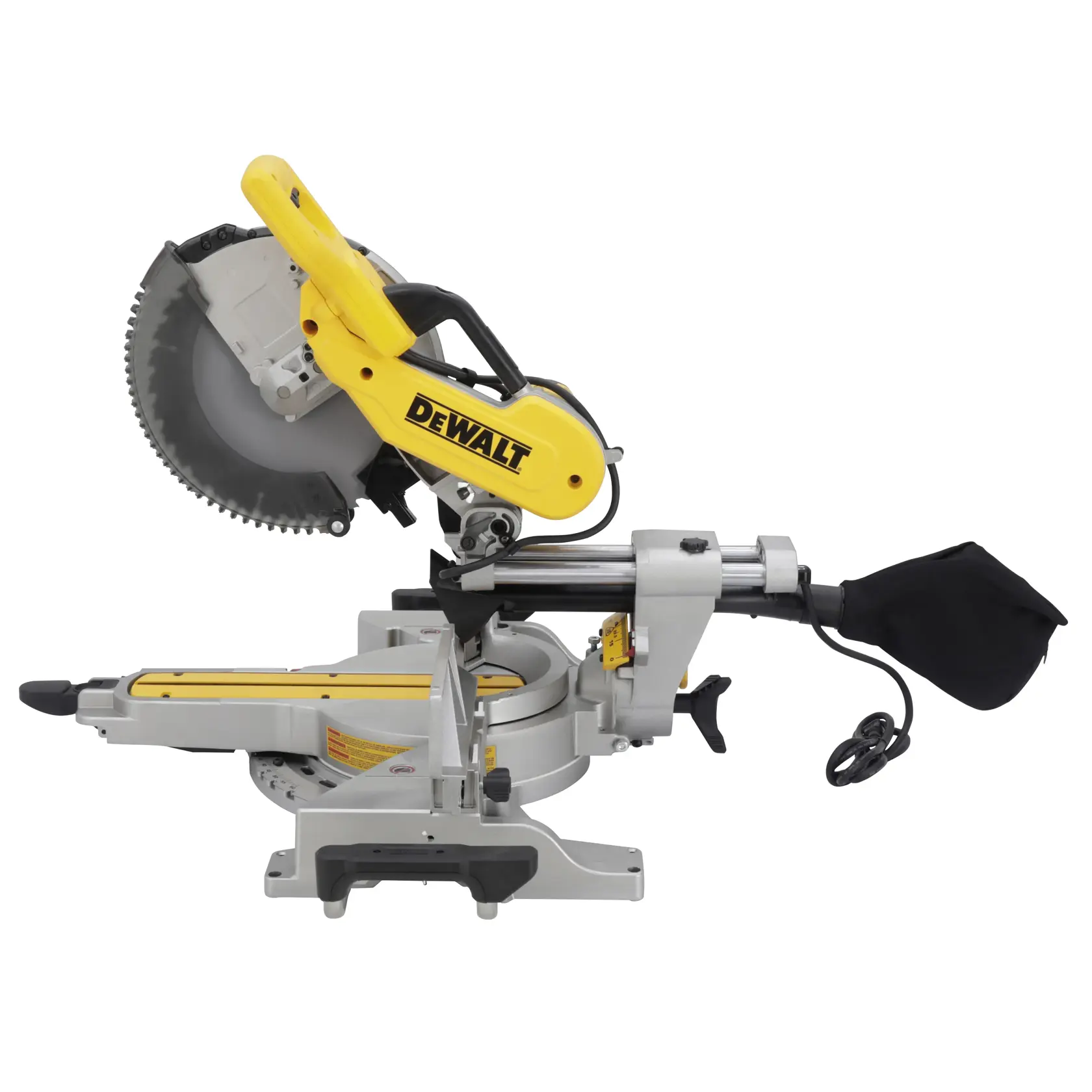
A sliding miter saw adds a rail system that lets the blade travel forward and back, dramatically increasing the maximum cut width. A non-sliding 12-inch saw cuts about 8 inches wide. A sliding 12-inch saw cuts 13-16 inches — enough for a 1x12 shelf board, a 2x12 floor joist, or a wide piece of plywood.
If you build furniture, install trim, work with lumber, or do any woodworking beyond hand-tool-only projects, a sliding compound miter saw is the most impactful single tool purchase you can make.
What to Look for Before Buying
Blade size (10” vs 12”): A 12-inch blade cuts wider and deeper than a 10-inch. For most DIYers, 10-inch is sufficient and blades cost less. Go 12-inch if you work with 2x12 lumber, wide crown molding, or sheet goods regularly.
Slide mechanism: Rails or articulating arm. Rails extend behind the saw (need wall clearance). Bosch’s axial-glide system folds up instead of back — fits against a wall. This matters if your workshop is tight.
Bevel range: Single-bevel saws tilt left only. Dual-bevel saws tilt left and right, so you do not have to flip the workpiece for opposite bevel cuts. Dual-bevel is worth the upgrade for trim and molding work.
Dust collection: Miter saws produce massive amounts of sawdust. Good dust collection saves you an hour of cleanup per project. Bad dust collection means wearing a respirator and sweeping constantly.
Fence quality: The fence must be flat, square, and rigid. A wobbly fence means every cut starts with a guess. Tall fences support crown molding on edge.
The 5 Best Sliding Miter Saws
1. DeWalt DWS780 12” Sliding Compound Miter Saw — Best Overall
Price: $399-449
The DWS780 has been the default recommendation in woodworking communities for years, and for good reason. It is accurate out of the box, built like an anvil, and has a crosscutting capacity that handles everything a DIYer or pro will throw at it.
What stood out:
- XPS LED cutline system projects a shadow of the blade onto the workpiece — more accurate than a laser because it shows the actual kerf width
- 16-inch crosscut capacity at 90 degrees. That handles 1x16 shelving and most plywood rips on a crosscut sled.
- Dual-bevel with positive stops at common angles (22.5, 33.85, 45, 49)
- Tall sliding fences support 7-1/2 inches of crown molding nested vertically
- Dust collection bag captures roughly 75% of debris — decent for a miter saw
What could be better:
- 56 lbs. This is not a saw you casually move to different job sites. It stays on the bench.
- The dust bag works but a direct shop vac connection is better. The included bag fills up fast.
- No cordless option. You are running an extension cord.
Best for: Workshop-based DIYers and pros who want the best crosscutting accuracy in a 12-inch platform. This is the saw to buy if you are buying one miter saw for the next 15 years.
2. Bosch GCM12SD 12” Axial-Glide Miter Saw — Best for Small Shops
Price: $499-549
The Bosch Axial-Glide is the answer to one of the miter saw’s biggest problems: space. Traditional sliding saws need 12+ inches of clearance behind the saw for the rails to extend. The Axial-Glide uses an articulating arm instead, so the saw head moves forward without extending backwards. You can push it flush against a wall.
What stood out:
- Axial-Glide saves 12+ inches of wall clearance. In a small garage workshop, this is transformative.
- 14-inch crosscut capacity — slightly less than the DeWalt but still handles wide boards
- Extremely smooth slide action. The glide mechanism feels premium.
- 60-tooth blade included — ready to make clean cuts out of the box
- Adjustable stainless steel miter plate with quick-lock detents
What could be better:
- $100+ more than the DeWalt DWS780. You are paying for the space-saving design.
- 65 lbs — even heavier than the DeWalt
- Dust collection is below average. The rear-exit design sends sawdust past the bag.
Best for: Anyone with limited workshop space who cannot afford wall clearance for a railed saw. The Axial-Glide mechanism is worth the premium if space is your constraint.
3. Makita LS1019L 10” Dual-Bevel Sliding Miter Saw — Best 10-Inch
Price: $349-399
If you do not need 12-inch capacity, the Makita LS1019L is the best 10-inch sliding miter saw available. It uses Makita’s direct-drive motor (no belt), which reduces vibration and maintenance. The laser guide is accurate, the miter detents are crisp, and the build quality is classic Makita.
What stood out:
- Direct-drive motor produces less vibration than belt-driven competitors
- 12-5/8 inch crosscut capacity — impressive for a 10-inch saw
- Compact and lighter than 12-inch saws at 43.7 lbs
- Laser guide is factory-calibrated and stayed accurate throughout testing
- 10-inch blades cost $15-30 vs $25-50 for 12-inch blades — long-term savings
What could be better:
- Cannot handle wide crown molding nested vertically (fence height is limited)
- 10-inch blade cannot cut through a 4x4 post in one pass (need to flip the piece)
- Still needs rear clearance for the slide rails
Best for: Trim carpenters, furniture builders, and DIYers who prioritize portability and lower blade costs.
4. Metabo HPT (Hitachi) C12RSH2S 12” Sliding Miter Saw — Best Value
Price: $299-349
Metabo HPT (formerly Hitachi) makes tools that punch above their price. The C12RSH2S delivers 90% of the DeWalt DWS780’s performance at $100 less. The laser guide, the micro-bevel adjustment, and the 15-amp motor are all here. You give up the XPS shadow line system and some fit-and-finish details, but the cuts are just as accurate.
What stood out:
- $299 for a 12-inch dual-bevel sliding saw. Nothing else at this price comes close.
- Laser marker is bright and reasonably accurate
- Zero-clearance sliding system — this saw can also sit close to a wall, similar to the Bosch
- Tall fences handle crown molding nested up to 6-5/8 inches
- 5-year warranty — longest in the category
What could be better:
- Dust collection is the weakest in our test. You need a shop vac connected or you will be sweeping.
- Miter detent system is functional but not as crisp as DeWalt or Bosch
- The laser drifts slightly after heavy use. Check calibration monthly.
Best for: Budget-conscious buyers who want 12-inch sliding capacity without the $400+ price tag. The 5-year warranty offsets concerns about longevity.
5. Ryobi TSS103 10” Sliding Compound Miter Saw — Best Budget Entry
Price: $159-189
For under $200, the Ryobi TSS103 gets you into a sliding miter saw. It will not win accuracy awards against the DeWalt or Makita, but it makes clean crosscuts, has a functional laser guide, and handles the cuts that 90% of homeowners need. Pair it with a quality blade and it overperforms its price bracket.
What stood out:
- Under $200 for a sliding compound miter saw. That was a $400 tool five years ago.
- LED cutline is surprisingly visible and accurate
- Positive stops at common angles work cleanly
- Lightweight at 35 lbs — easy to move and store
What could be better:
- Single bevel only (tilts left, not right). You will flip workpieces for opposite bevels.
- Miter lock can slip under heavy cuts. Double-check angle before cutting.
- Dust collection is almost non-existent. Shop vac is mandatory.
- Stock blade is rough. Upgrade to a Diablo or Freud blade immediately.
Best for: First-time miter saw buyers, occasional home improvement projects, and anyone who wants to try a miter saw without a major investment.
Recommended Accessories
A miter saw alone is half the setup. These accessories make a real difference:
- Miter saw stand: A folding stand with material supports ($80-200). Kreg and DeWalt make the best ones.
- Quality crosscut blade: Diablo D1060X (10”) or D1260X (12”). A $40 blade upgrade transforms a cheap saw.
- Stop block: Clamps to the fence for repeatable cuts. Essential for cutting multiple pieces to the same length.
- Dust collection adapter: Connects the saw’s port to a shop vac hose. $5-10 and saves hours of cleanup.
Frequently Asked Questions
Is a 10-inch or 12-inch miter saw better for DIY?
A 10-inch saw handles 95% of DIY tasks at lower blade cost and lighter weight. Go 12-inch if you work with 2x12 lumber, wide crown molding, or want the maximum crosscut capacity without limitation. When in doubt, 12-inch gives you headroom you will appreciate later.
Can a miter saw cut metal?
With the right blade (abrasive or ferrous-metal carbide blade), yes. Some miter saws are marketed as multi-material. For occasional metal cutting, a dedicated metal-cutting blade on a standard miter saw works. For regular metal work, a dedicated cold-cut metal saw is safer.
How accurate should a miter saw be out of the box?
A quality miter saw should cut within 0.5 degrees of the indicated angle and produce a square crosscut (90 degrees) without adjustment. The DeWalt, Bosch, and Makita in our test were all within spec out of the box. Cheaper saws may need initial calibration.
Do I need a sliding miter saw or is a fixed one fine?
A fixed 12-inch saw crosscuts about 8 inches wide. A slider does 13-16 inches. If you only cut 2x4 and 2x6 lumber, fixed is fine and costs less. If you cut wider boards, shelving material, or crown molding, get a slider.
How do I reduce dust from a miter saw?
Connect a shop vac to the dust port — this captures 3x more dust than the included bag. Build a simple dust hood behind the saw from plywood and connect it to dust collection. Position the saw near a garage door when possible. Wear a respirator regardless.