WOODWORKING ·15 MIN READ

Jigsaw vs Circular Saw: Which One Should You Buy First?

Jigsaw or circular saw — the first power saw most DIYers buy. Here's the honest verdict on which earns its spot in your tool bag first based on the projects you actually do.

A jigsaw and circular saw side by side on a sheet of plywood

Jigsaw vs Circular Saw: Which One Should You Buy First?

Embarking on the journey of DIY projects, home improvement, or even professional carpentry demands the right tools. Among the most fundamental and frequently debated power saws for any budding enthusiast are the jigsaw and the circular saw. Both are indispensable in their own right, offering distinct capabilities that make them suited for different tasks. But if you’re standing in the hardware store aisle, budget in hand, wondering which one deserves a spot in your toolkit first, this comprehensive comparison is for you. We’ll break down their strengths, weaknesses, safety profiles, price points, and specific use cases to help you make an informed decision for build-coded.com.

Understanding the Jigsaw: The Artist’s Saw

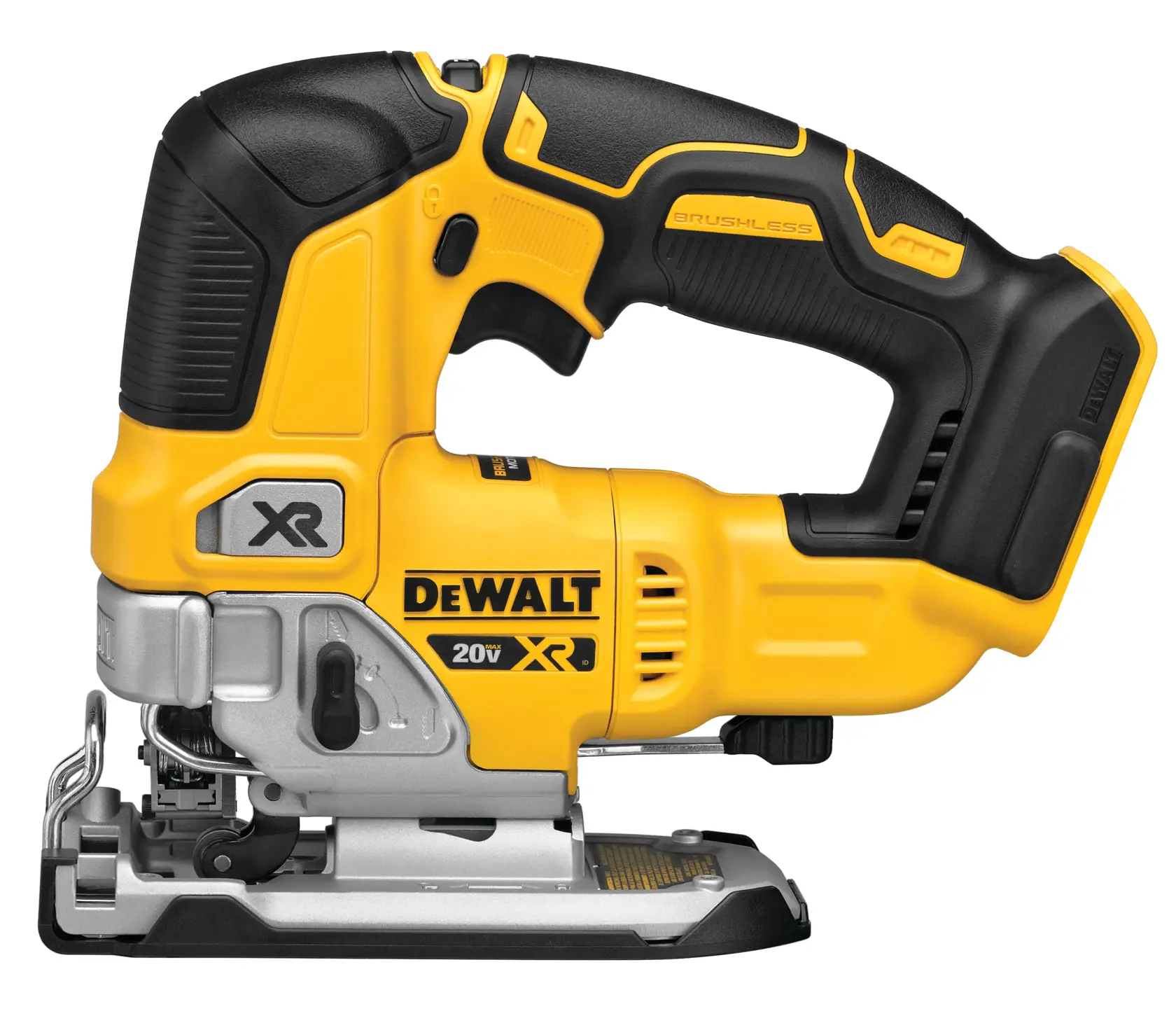
The jigsaw, often affectionately called a saber saw, is renowned for its agility and precision in cutting intricate shapes. It operates with a reciprocating blade that moves rapidly up and down, making it ideal for non-linear cuts.

What the Jigsaw Excels At:

  • Curves and Scrolls: This is the jigsaw’s undisputed domain. Its narrow, fine blade allows it to navigate tight radii, making it perfect for decorative cuts, crafting intricate designs, and creating curved edges on tabletops or shelves.
  • Interior Cutouts and Plunge Cuts: Unlike many other saws, a jigsaw can start a cut in the middle of a workpiece without needing to approach from an edge. This “plunge cut” capability is invaluable for creating sink cutouts in countertops, electrical box openings in drywall, or any internal shape. You simply drill a pilot hole, insert the blade, and begin cutting.
  • Intricate Shapes and Craft Projects: From making custom wooden signs with curved lettering to cutting out shapes for toys or decorative items, the jigsaw offers unparalleled control for detailed work.
  • Smaller, Thinner Materials: While capable of cutting thicker stock, jigsaws are often preferred for thinner wood, plastic, and even sheet metal, where precision and minimal tear-out are desired.

Jigsaw Accuracy Trade-off:

While a jigsaw offers exceptional control for curves, achieving perfectly straight, long cuts can be challenging. The thin, flexible blade is prone to deflection, especially in thicker materials or if pushed too fast, leading to cuts that wander or become beveled. For short straight cuts, a clamped straight edge can help, but for anything over a foot or two, maintaining consistent accuracy is difficult without specialized guides or a steady hand developed over time.

Jigsaw Blade Options:

The versatility of a jigsaw is greatly expanded by its wide array of blade types. Blades typically come in two main shank styles: T-shank (more common and secure) and U-shank. Beyond that, blades vary by:

  • Tooth Count (TPI - Teeth Per Inch):
    • Low TPI (6-10 TPI): Faster, coarser cuts, good for rough framing or rapid material removal, but leaves a rougher edge.
    • Medium TPI (10-14 TPI): General purpose, good balance of speed and finish.
    • High TPI (14-24+ TPI): Slower, finer cuts, ideal for precise work, laminates, and metal, resulting in a smoother finish with less tear-out.
  • Blade Material:
    • HCS (High Carbon Steel): For wood, plastics, and softer materials.
    • HSS (High Speed Steel): More durable than HCS, suitable for harder woods, aluminum, and non-ferrous metals.
    • BiM (Bi-Metal): A combination of HCS and HSS, offering excellent durability and flexibility, ideal for general purpose cutting across various materials, including hard metals.
    • Carbide-Tipped: For abrasive materials like ceramic tile, fiberglass, and stainless steel.
  • Specialized Blades: Scrolling blades (very narrow for tight curves), flush-cut blades (offset to cut close to a surface), reverse-tooth blades (for splinter-free top surface cuts), and even grit blades for ceramics.

Jigsaw Safety Profile:

Compared to a circular saw, a jigsaw is generally considered safer for beginners. Its blade is smaller, reciprocates rather than rotates, and is mostly enclosed by the shoe. The primary safety concerns include:

  • Blade Snap/Breakage: Pushing the saw too hard, forcing a turn, or using the wrong blade for the material can cause the blade to snap. While usually not a severe hazard, flying blade fragments can cause eye injury. Always wear safety glasses.
  • Kickback (less common): While rare, a jigsaw can kick back if the blade binds in the material.
  • Finger Proximity: Keep fingers well clear of the cutting path, especially when making interior cuts or adjusting the workpiece.
  • Vibration: Extended use can lead to hand fatigue.

Jigsaw Price Point:

Entry-level jigsaws are among the most affordable power tools, typically ranging from $40 to $80. More advanced models with features like variable speed, orbital action, and tool-less blade changes can go up to $150-$250, but a basic model is perfectly capable for most DIY tasks.

Understanding the Circular Saw: The Workhorse

The circular saw is a powerhouse, a staple in construction and woodworking shops worldwide. It features a spinning, toothed blade that makes fast, powerful, and remarkably straight cuts.

What the Circular Saw Excels At:

  • Long, Straight Rips: For cutting large sheets of plywood, MDF, or OSB lengthwise (ripping), the circular saw, especially when paired with a straight edge or track, is unmatched in speed and efficiency.
  • Sheet Goods Breakdown: Breaking down 4x8 sheets of material into smaller, manageable pieces is where the circular saw truly shines. It’s faster and more efficient than almost any other portable saw for this task.
  • Framing and Deck Boards: When building decks, sheds, or house frames, the ability to quickly and accurately crosscut dimensional lumber (2x4s, 2x6s, etc.) makes the circular saw indispensable. Its power allows it to slice through thick wood with ease.
  • Crosscuts: While a miter saw is often preferred for precise crosscuts, a circular saw can make perfectly acceptable crosscuts on dimensional lumber and sheet goods, especially with the aid of a speed square or guide.
  • Bevel Cuts: Most circular saws allow the blade to tilt, enabling precise bevel cuts for fascia, trim, or angled framing.

Circular Saw Accuracy Trade-off:

A circular saw is designed for straight-line cutting, and it excels at it over long distances, provided you use a guide. However, its larger blade and powerful motor make it challenging to control for detailed, intricate, or curved cuts. Trying to cut a curve with a circular saw is not only difficult but dangerous, as the blade can bind and cause kickback. For a beginner, freehand straight cuts can still wander without a guide, highlighting the importance of accessories like speed squares, straight edges, or track saw systems for accuracy.

Circular Saw Blade Options:

Circular saw blades are defined by their diameter (most commonly 7-1/4 inches for handheld saws), arbor size (the hole in the center), and tooth configuration:

  • Tooth Count (TPI - Teeth Per Inch):
    • Low TPI (18-24 TPI): Best for fast, rough cuts, especially for framing and ripping solid wood. Leaves a rougher finish.
    • Medium TPI (40-60 TPI): Combination blades suitable for both ripping and crosscutting, offering a good balance of speed and finish for general woodworking.
    • High TPI (60-80+ TPI): Fine-finish blades, ideal for plywood, laminates, and delicate materials where a very smooth cut is paramount. Slower cutting speed.
  • Blade Material:
    • Steel Blades: Inexpensive, but dull quickly. Mostly for very rough, disposable applications.
    • Carbide-Tipped Blades: The most common and recommended type. Carbide teeth stay sharp much longer, offering superior performance and durability for a wide range of materials.
  • Specialized Blades:
    • Framing Blades: High TPI, designed for fast, rough cuts through construction lumber.
    • Plywood/Finish Blades: High TPI, designed to minimize tear-out on veneered plywood and other delicate materials.
    • Metal Cutting Blades: Specialized teeth and often a different material composition (e.g., Cermet) for cutting steel, aluminum, and other metals.
    • Masonry Blades: Abrasive blades (no teeth) for cutting concrete, brick, and tile.

Circular Saw Safety Profile:

The circular saw is a powerful tool and demands respect. Its primary safety concern is kickback, which occurs when the blade binds in the material, causing the saw to violently jump back towards the user. This can lead to serious injury. Other hazards include:

  • Blade Exposure: The spinning blade is dangerous. Always ensure the blade guard functions correctly and retracts fully.
  • Flying Debris: Sawdust and wood chips can fly forcefully. Always wear safety glasses and hearing protection.
  • Lacerations: The sheer power and speed of the blade can cause severe cuts. Maintain a firm grip, keep hands clear of the cutting path, and ensure the workpiece is properly supported.
  • Cord Awareness: For corded models, ensure the cord is always clear of the blade’s path.

Mitigating kickback involves using sharp blades, proper depth settings, supporting the workpiece correctly, and maintaining a firm, two-handed grip.

Circular Saw Price Point:

Entry-level circular saws typically cost between $60 and $130. More powerful, feature-rich models (e.g., brushless motors, magnesium shoes, advanced braking systems) can range from $150 to $300+.

Direct Comparison: Accuracy, Safety, and Versatility

  • Accuracy: For long, straight cuts, the circular saw is inherently more accurate, especially when paired with a guide. Its rigid blade and powerful motor maintain a consistent cut line. The jigsaw, with its flexible blade, struggles with long straightness but is unmatched for intricate curves.
  • Safety: The jigsaw is generally considered safer for beginners due to its lower power and smaller, reciprocating blade. The circular saw’s kickback risk and exposed spinning blade demand greater caution and proper technique.
  • Versatility: This is where the debate gets interesting. The circular saw is incredibly versatile for construction, framing, and breaking down large materials, forming the backbone of many structural projects. The jigsaw offers versatility in decorative work, internal cuts, and intricate designs, complementing the circular saw’s capabilities rather than directly competing.

Decision Matrix: Which Tool for Which Project?

Let’s apply our knowledge to common DIY scenarios:

  • Building a Deck: Circular Saw. You’ll be cutting countless deck boards, joists, and posts, all requiring fast, straight, and often repetitive cuts. A circular saw with a framing blade will power through this work efficiently and accurately.
  • Cutting a Hole in a Countertop for a Sink or Cooktop: Jigsaw. This is a classic jigsaw task. You’ll drill pilot holes in the corners and then use the jigsaw to make precise interior cuts, navigating any curved corners of the template.
  • Making a Custom Wooden Sign with Curved Letters or Shapes: Jigsaw. For intricate designs, scrolling cuts, and following detailed templates, the jigsaw is the only practical tool. Its ability to maneuver tight curves is essential here.
  • Breaking Down a 4x8 Sheet of Plywood for Cabinetry: Circular Saw (with a track or straight edge). Attempting this with a jigsaw would be slow, inaccurate, and frustrating. A circular saw, especially when guided by a clamped straight edge or a dedicated track saw system, will yield perfectly straight, clean cuts across the entire sheet, making it manageable for further work.
  • Rounding the Corners of a Tabletop: Jigsaw. Once you’ve drawn your desired radius, the jigsaw can smoothly follow the line, creating a clean, curved edge that a circular saw simply cannot replicate.

The Big Question: Which One Should You Buy First?

For most DIYers, especially those just starting to build their toolkit for general home improvement, renovation, or structural projects, the circular saw should be your first purchase.

Here’s why:

  1. Fundamental Versatility for Structural Work: The circular saw covers a broader range of essential, foundational tasks. From cutting dimensional lumber for framing (a shed, a wall, a fence) to breaking down sheet goods for subflooring or basic cabinetry, its ability to make fast, straight cuts is paramount. Many DIY projects begin with breaking down large materials or cutting framing members, and the circular saw is the king of these tasks.
  2. Efficiency and Power: It offers speed and power that a jigsaw simply cannot match for larger cuts. When you need to cut through a 2x10 or slice a sheet of plywood, the circular saw gets the job done quickly and cleanly.
  3. Foundation for Growth: Mastering the circular saw lays a strong foundation for more advanced woodworking. The principles of using guides for straight cuts, understanding blade types, and practicing safe operation are transferable skills.

However, there’s a significant caveat: the jigsaw is a fantastic, cheaper, and arguably safer option for absolute beginners who might be intimidated by the power of a circular saw or whose initial projects are more craft-oriented.

  • If your primary interest is decorative work, crafting, or making intricate cuts on smaller pieces, a jigsaw might be more immediately useful and less intimidating.
  • If your budget is extremely tight, the lower entry cost of a jigsaw might be more appealing.
  • If you’re only making small repairs or cutting thin materials, a jigsaw is perfectly adequate.

Ultimately, the ideal scenario is to own both. They are complementary tools, each excelling where the other falters. The circular saw handles the heavy lifting and straight lines, while the jigsaw tackles the curves and detail work.

Recommendation Summary:

  • Buy a Circular Saw First if: You plan on tackling projects involving framing, building structures (decks, sheds), breaking down large sheets of material, or general home renovation. It’s the workhorse for most substantial DIY.
  • Consider a Jigsaw First if: You’re on a very tight budget, prioritize safety as an absolute beginner, or your initial projects are primarily craft-based, decorative, or involve intricate curves and interior cutouts.

No matter which you choose, invest in good quality blades for both, and always prioritize safety with appropriate personal protective equipment (PPE) like safety glasses and hearing protection. Happy building!


Frequently Asked Questions (FAQ)

1. Can a jigsaw cut through 2x4 lumber?

Yes, a jigsaw can cut through 2x4 lumber (which is actually 1.5 inches by 3.5 inches). However, it will be slower and less accurate than a circular saw, and achieving a perfectly straight cut across the 3.5-inch width can be challenging due to blade deflection. It’s best for occasional crosscuts or when a circular saw isn’t available.

2. Can I use a circular saw to cut curves?

No, absolutely not. A circular saw is designed for straight cuts only. Attempting to cut curves will cause the blade to bind in the material, leading to dangerous kickback and potential damage to the saw or workpiece. Use a jigsaw for all curved cuts.

3. What does “TPI” mean, and why is it important for saw blades?

TPI stands for “Teeth Per Inch.” It indicates how many teeth a blade has along one inch of its cutting edge. A lower TPI means fewer, larger teeth, which are good for faster, rougher cuts (e.g., framing lumber). A higher TPI means more, smaller teeth, which are good for slower, smoother, and finer cuts (e.g., plywood, laminates, metal). Choosing the correct TPI for your material is crucial for efficiency, cut quality, and blade longevity.

4. Is one saw better for cutting metal than the other?

Both can cut metal with the right blade. A jigsaw with a high-TPI bi-metal or HSS blade is excellent for cutting thinner sheet metal or aluminum. A circular saw, when fitted with a specialized metal-cutting blade (often Cermet-tipped), can cut thicker gauge steel, angle iron, and other ferrous metals much faster and more efficiently than a jigsaw, but it’s a more aggressive operation requiring specific technique and safety gear.

5. What’s the difference between a corded and cordless saw?

Corded saws offer continuous power without needing battery changes and are generally more powerful for heavy-duty tasks. Cordless saws offer portability and convenience, allowing you to work anywhere without an outlet, but they rely on battery life and might have slightly less power for demanding applications. For a first saw, a corded model often offers more bang for your buck in terms of power and sustained performance.

6. Do I need a guide for my circular saw?

While you can make freehand cuts, using a guide (like a speed square for crosscuts, or a clamped straight edge/track system for long rips) is highly recommended for a circular saw. It significantly improves accuracy, ensures straight cuts, and makes the saw much safer to operate by preventing the blade from wandering and binding.

7. Can I make plunge cuts with a circular saw?

Yes, but it’s more challenging and potentially more dangerous than with a jigsaw. A circular saw plunge cut involves starting the saw with the blade guard retracted, tilting the front of the shoe onto the workpiece, and slowly lowering the spinning blade into the material. It requires careful technique and is typically used for specific tasks like cutting out subfloor sections, not for intricate interior cutouts. A jigsaw is much safer and easier for most plunge cut applications.

8. What safety gear should I always use with these saws?

Regardless of which saw you’re using, always wear safety glasses to protect against flying debris. Hearing protection is also highly recommended, especially for the louder circular saw. Gloves can offer grip and protection against splinters, but ensure they don’t interfere with your dexterity or get caught in moving parts. A dust mask is advisable for prolonged cutting, especially with materials like MDF or treated lumber.

Tagged
jigsawcircular sawpower toolswoodworkingtool comparison
Share
Home Projects Tool Find More