DeWalt vs Milwaukee Cordless Drills: Which Wins in 2026?
In the ever-evolving landscape of power tools, the rivalry between DeWalt and Milwaukee stands as one of the fiercest and most enduring. For professional tradespeople and serious DIYers alike, choosing between these two titans often feels like a foundational decision, shaping not just your immediate project but your entire toolkit for years to come. As we peer into 2026, the question remains: which brand’s cordless drill reigns supreme?
This isn’t just about raw power; it’s about an intricate dance of ergonomics, battery commitment, ecosystem breadth, and ultimately, value. We’re going to pit two of their most popular and representative cordless drills against each other: the DeWalt 20V Max XR DCD800 and the Milwaukee M18 Fuel 2904. While these models represent slightly different classes of drills – the DCD800 being a compact drill driver and the 2904 a full-sized hammer drill – they are both front-line workhorses for their respective brands and offer a fantastic basis for comparing the broader platforms. Our goal is to provide an honest, in-depth analysis to help you make the smartest choice for your needs in the coming years.
The Contenders: DeWalt DCD800 vs. Milwaukee 2904
Before diving into the nitty-gritty, let’s properly introduce our combatants.
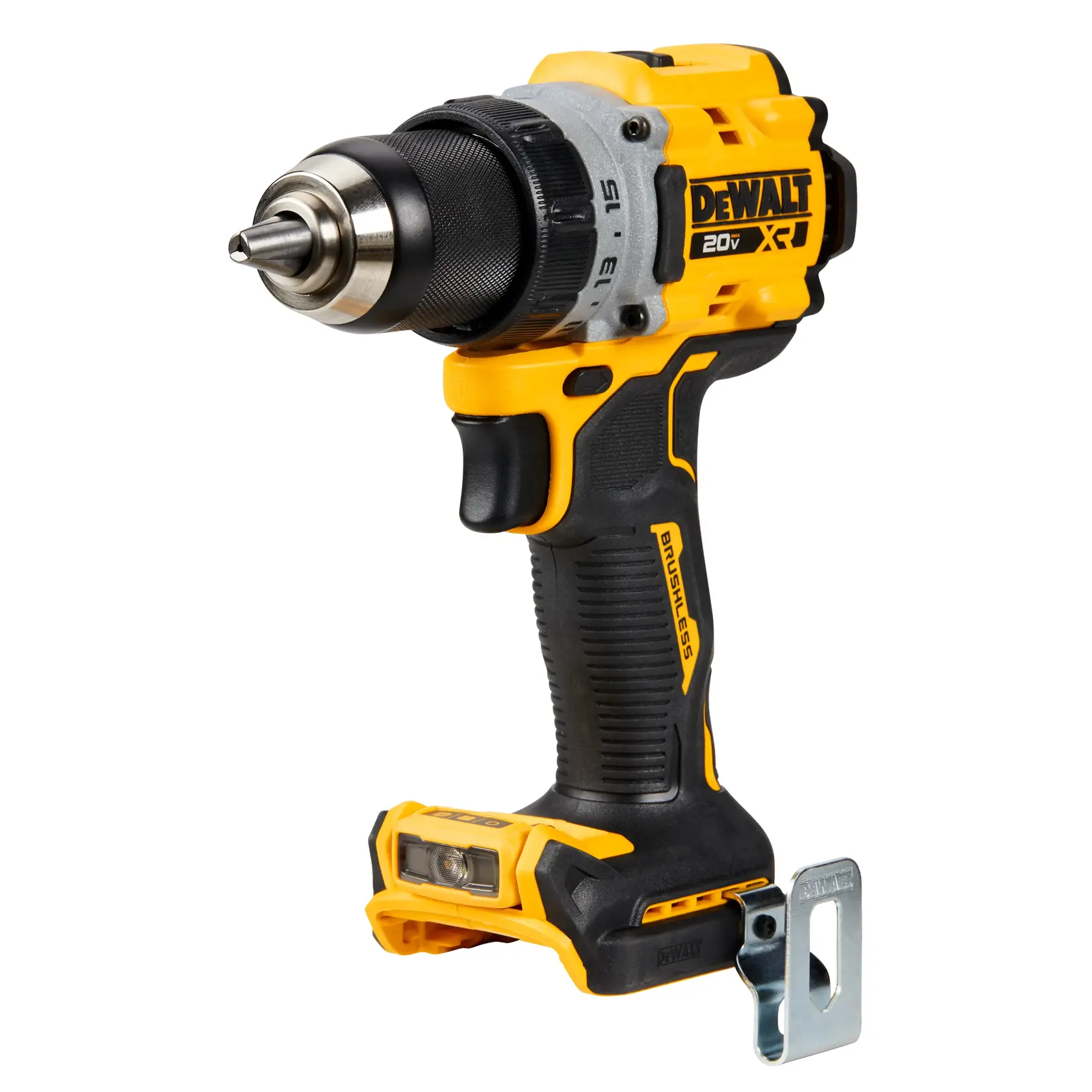
The DeWalt 20V Max XR DCD800 is a testament to DeWalt’s commitment to compact power and versatility. Positioned as their premium compact drill driver, it’s designed to be a daily driver for a wide array of tasks, from drilling pilot holes to driving medium-sized fasteners. It boasts a brushless motor, promising efficiency and longevity, and is a staple in many professional toolboxes due to its balance and user-friendly design. It’s part of DeWalt’s extensive 20V Max XR lineup, signifying its brushless technology and extended runtime capabilities.
The Milwaukee M18 Fuel 2904, on the other hand, is Milwaukee’s flagship hammer drill. This machine is built for brute force and demanding applications. The “Fuel” designation means it incorporates Milwaukee’s most advanced brushless motor, REDLINK PLUS™ intelligence, and REDLITHIUM™ battery technology, all working in concert to deliver unparalleled performance and durability. While it can handle delicate tasks, its true calling is heavy-duty drilling in wood, metal, and especially masonry when in hammer drill mode.
A Note on Torque Numbers: The specifications provided highlight a significant difference: DeWalt DCD800 at 340 in-lb versus Milwaukee 2904 at 1200 in-lb peak. It’s crucial to understand this discrepancy. The 340 in-lb for the DCD800 likely refers to its UWO (Units Watts Out) rating, a measure of power output, rather than its maximum torque. The DCD800 actually offers a robust 755 in-lb of max torque. The Milwaukee 2904, as a full-sized hammer drill, is indeed rated at an impressive 1200 in-lb of peak torque. This difference in maximum torque reflects their intended primary uses: the DCD800 is a powerful compact drill driver, excelling in everyday tasks where maneuverability is key, while the 2904 is a full-sized hammer drill designed for the absolute toughest drilling and driving applications, including concrete. While this isn’t an apples-to-apples comparison in terms of raw power class, it allows us to evaluate how each brand approaches different segments of the drill market with their best-in-class offerings.
Battery Platform Commitment: The Real Lock-In Factor
When investing in cordless tools, the drill itself is often just the gateway. The true commitment, and the real “lock-in” factor, lies in the battery platform. Both DeWalt and Milwaukee have built colossal ecosystems around their respective battery lines, and once you buy into one, switching becomes an expensive and inconvenient proposition.
DeWalt’s 20V Max Platform: DeWalt’s 20V Max system is incredibly mature and diverse. It encompasses everything from compact drivers to heavy-duty grinders, outdoor power equipment, and even jobsite lighting and radios. The “20V Max” branding refers to the initial peak voltage, which settles to 18V under load, aligning with industry standards. A key advantage for DeWalt users is the FlexVolt system. FlexVolt batteries are unique in their ability to automatically switch between 20V Max and 60V Max, powering both the standard 20V tools and the more demanding 60V FlexVolt tools. This offers incredible versatility, allowing users to leverage higher voltage tools without committing to an entirely new battery platform. This backward compatibility and forward-thinking design make the 20V Max platform highly attractive for those who anticipate needing higher-power tools down the line.
Milwaukee’s M18 Platform: Milwaukee’s M18 platform is equally formidable, renowned for its relentless innovation and focus on professional users. The M18 system is vast, covering an incredible breadth of tools across construction, plumbing, electrical, and automotive trades. Milwaukee prides itself on its REDLITHIUM™ battery technology and REDLINK PLUS™ intelligence, which optimize performance, protect tools and batteries from overload, and maximize run-time. While Milwaukee also has the M12 platform for smaller, more specialized tools, the M18 is their workhorse system. Milwaukee’s PACKOUT modular storage system is also a significant draw, offering seamless integration with their tools and accessories, creating a comprehensive jobsite solution.
Choosing a platform means committing to a family of batteries and chargers. This isn’t a decision to take lightly. Consider your future needs: Do you anticipate needing a wide range of specialized tools? Do you value the flexibility of a multi-voltage battery system like FlexVolt? Or do you prefer a dedicated, robust 18V system with a strong emphasis on smart technology and jobsite organization like M18? Both platforms are incredibly robust, but their nuances might sway you one way or the other.
Ergonomics and User Experience
A drill can have all the power in the world, but if it’s uncomfortable to hold or cumbersome to use, it quickly becomes a frustration. Ergonomics plays a massive role in user fatigue and overall jobsite productivity.
DeWalt DCD800: DeWalt has a long-standing reputation for excellent ergonomics, and the DCD800 continues this tradition. It features a well-balanced design that feels natural in the hand, reducing strain during extended use. The rubber overmold grip is textured, providing a secure hold even with sweaty or gloved hands. The trigger action is smooth and responsive, allowing for precise speed control. Its compact head length makes it easy to maneuver in tight spaces. The LED work light is positioned above the trigger, casting a decent beam on the work surface, though some users might prefer a ring light for shadow-free illumination.
Milwaukee 2904: Milwaukee’s M18 Fuel 2904 also boasts impressive ergonomics, albeit with a slightly different feel due to its larger size and power. Despite its robust build, the 2904 is surprisingly well-balanced, especially with a compact battery. The grip is contoured and features a comfortable, grippy texture that inspires confidence. The trigger is highly responsive, allowing for excellent control, which is essential given its high torque output. The side handle is a welcome addition for heavy-duty drilling, providing extra leverage and stability. The LED light is bright and effective, positioned low on the foot of the tool, minimizing shadows. Given its power, Milwaukee has done an excellent job making the 2904 feel manageable.
Ultimately, ergonomics is subjective. What feels perfect to one user might feel awkward to another. However, both brands have clearly invested heavily in design to ensure their drills are comfortable and intuitive to operate. If possible, always try to hold both drills in a store to see which one resonates best with your hand size and preferences.
Weight and Maneuverability
Closely tied to ergonomics is the weight of the tool and how it impacts maneuverability, especially during prolonged use or when working overhead.
DeWalt DCD800: Being a compact drill driver, the DCD800 naturally has an advantage in the weight department. Bare tool, it weighs around 2.9 lbs. When paired with a compact 2.0Ah or 3.0Ah battery, its overall weight remains light and nimble, typically under 4 lbs. This makes it ideal for overhead work, repetitive tasks, or working in confined spaces where bulk is a hindrance. Its shorter head length further enhances its maneuverability, allowing it to fit into tighter spots than its full-sized counterparts.
Milwaukee 2904: The Milwaukee 2904, as a full-sized hammer drill, is inherently heavier. The bare tool weighs approximately 3.3 lbs. When equipped with a standard 5.0Ah M18 battery, the total weight can approach 5 lbs or more. While this added mass contributes to its robust feel and helps absorb recoil during heavy drilling, it can lead to quicker fatigue during extended overhead work. However, for demanding tasks where power is paramount, the extra weight is a necessary trade-off for stability and control. For lighter work, users might opt for a smaller 2.0Ah or 3.0Ah battery to reduce the overall weight, though this will impact runtime.
For tasks requiring precision, overhead work, or frequent repositioning, the DeWalt DCD800’s lighter weight and compact profile offer a clear advantage. For applications demanding maximum power and stability, the Milwaukee 2904’s heavier build is a benefit.
Runtime Under Load
Runtime is a critical factor, especially for professionals who rely on their tools throughout the workday. It’s not just about the battery’s Ah rating but also the tool’s efficiency, primarily driven by its brushless motor and intelligent electronics.
Both the DeWalt DCD800 and Milwaukee 2904 feature advanced brushless motors, which are significantly more efficient than older brushed designs. Brushless motors convert more battery power into usable work, generating less heat and extending both runtime and motor life.
DeWalt DCD800: When paired with a 5.0Ah 20V Max battery, the DCD800 delivers excellent runtime for its class. For typical drilling (e.g., 1-inch holes in wood) and driving applications (e.g., 3-inch screws), users can expect to get through a substantial amount of work on a single charge. Its efficiency means that even with smaller 2.0Ah or 3.0Ah batteries, it remains a capable tool for most tasks, offering a good balance of power and portability.
Milwaukee 2904: The M18 Fuel 2904, with its higher power output, naturally consumes more energy under heavy load. However, Milwaukee’s REDLITHIUM™ batteries and REDLINK PLUS™ intelligence are specifically designed to optimize this. When paired with a high-capacity M18 XC 5.0Ah or HD12.0 battery, the 2904 can tackle incredibly demanding tasks for impressive durations. Drilling large holes with an auger bit or core bit, or hammering into concrete, are battery-intensive operations, but the 2904’s system ensures it gets the job done efficiently. Its performance under extreme load is where Milwaukee often shines, pushing the boundaries of what cordless tools can achieve.
In real-world testing, both drills offer excellent runtime for their respective classes. For general-purpose tasks, the DCD800’s efficiency with a 5.0Ah battery is more than adequate. For continuous heavy-duty work, especially tasks that would typically challenge corded tools, the 2904 with a high-capacity Milwaukee battery will likely provide superior endurance.
Warranty and Customer Support
A robust warranty and reliable customer support are crucial for professional tools, offering peace of mind and protecting your investment.
DeWalt: DeWalt typically offers a 3-year limited warranty on their cordless power tools, including the DCD800. This is accompanied by a 1-year free service contract and a 90-day money-back guarantee. Their service network is extensive, with authorized service centers readily available. DeWalt’s warranty is generally considered solid, covering defects in materials or workmanship under normal use.
Milwaukee: Milwaukee often provides a more generous warranty, typically a 5-year limited warranty on most of their M18 cordless power tools, including the 2904. Batteries usually have a separate warranty, with their XC (extended capacity) batteries often covered for 3 years and CP (compact) batteries for 2 years, while chargers typically have a 1-year warranty. Milwaukee also boasts a strong service network and is generally well-regarded for its customer support and ease of warranty claims.
While both brands offer good warranty coverage, Milwaukee’s 5-year tool warranty often gives it an edge in terms of initial peace of mind for long-term ownership. However, DeWalt’s 1-year free service can be a valuable perk for immediate issues.
Price (Drill Kit Cost)
Price is almost always a deciding factor. When comparing drill kits, it’s essential to look at what’s included: typically the drill, two batteries (often one compact and one extended capacity), a charger, and a carrying bag or case.
As of early 2026, prices are subject to constant fluctuation due to sales, promotions, and retailer competition. However, we can look at general trends.
The DeWalt DCD800 kit (with two 5.0Ah batteries, charger, and bag) can often be found in the range of $250-$350 USD. Given its compact size and excellent performance, it offers strong value.
The Milwaukee M18 Fuel 2904 kit (with two 5.0Ah XC batteries, charger, and PACKOUT case or bag) typically ranges from $350-$450 USD. Its higher price reflects its status as a flagship, high-torque hammer drill with advanced technology.
It’s important to shop around, especially during major sales events (Black Friday, Prime Day, etc.), where significant discounts can be found on both brands. Sometimes, a “free tool” promotion when buying a battery kit can dramatically alter the perceived value. While the Milwaukee 2904 kit generally carries a higher price tag, it’s also a more powerful and feature-rich tool from the outset.
Ecosystem: More Than Just a Drill
The sheer breadth of tools available on each platform is staggering, and this is where the “lock-in” becomes a positive. Both DeWalt and Milwaukee boast ecosystems with over 200 tools each, covering virtually every conceivable trade and application.
DeWalt’s Ecosystem: DeWalt’s 20V Max platform is incredibly comprehensive. Beyond traditional power tools like saws, grinders, and impact wrenches, they offer a vast array of outdoor power equipment (leaf blowers, string trimmers), jobsite lighting, radios, vacuums, and even specialized tools for plumbing, electrical, and automotive work. The integration of FlexVolt batteries means you can also tap into their higher-voltage 60V and 120V tools for heavy-duty applications like miter saws and table saws, all using the same battery interface. This flexibility is a significant draw for users who require a diverse range of power levels.
Milwaukee’s Ecosystem: Milwaukee’s M18 ecosystem is equally impressive, often celebrated for its depth in specialized tools for specific trades. They are particularly strong in plumbing (PEX tools, drain snakes), electrical (cable cutters, crimpers), and automotive (impact wrenches, polishers). Their PACKOUT modular storage system is a game-changer for jobsite organization, and the seamless integration of tools into this system is a major selling point. Milwaukee also offers a wide range of outdoor power equipment, lighting, and heavy-duty tools, all benefiting from their REDLITHIUM™ and REDLINK PLUS™ technologies. They are often perceived as pushing the boundaries of what cordless tools can achieve in terms of raw power and specialized functionality.
For most users, both platforms offer more tools than they will ever need. The choice often comes down to specific niche tools that might be critical for your profession. For instance, if you’re a plumber, Milwaukee might have a slight edge in specialized M18 tools. If you need the flexibility of multi-voltage tools from one battery system, DeWalt’s FlexVolt is a unique advantage.
Which Wins for Specific Applications?
Let’s break down which drill might be better suited for particular tasks, keeping in mind the DCD800 is a compact drill driver and the 2904 is a full-size hammer drill.
-
Framing: Milwaukee M18 Fuel 2904 wins. For heavy-duty framing, you need maximum power, speed, and the ability to drill large holes (e.g., with auger bits or self-feed bits) through multiple studs. The 2904’s 1200 in-lb of torque and its robust construction are simply better suited for this demanding work. Its hammer function is also useful for occasional concrete anchors. While the DCD800 can handle smaller framing tasks, it will struggle with the continuous heavy loads of professional framing.
-
Cabinet Install: DeWalt 20V Max XR DCD800 wins. Precision, maneuverability, and lighter weight are paramount here. You’re often working in confined spaces, overhead, or at awkward angles. The DCD800’s compact size, excellent balance, and precise clutch control make it ideal for driving cabinet screws without cam-out or over-driving, and for drilling pilot holes accurately. The 2904 would be overkill and potentially cumbersome for this type of work.
-
Automotive: Milwaukee M18 Fuel 2904 wins. While an impact wrench is the primary tool for automotive fasteners, a powerful drill is still essential for drilling out broken bolts, cleaning threads, or driving larger fasteners. The 2904’s superior torque and durability make it more capable of handling the tough, often rusted, conditions found in automotive repair. Its robust build is also better suited to the harsh environment of a garage.
-
Electronics Work: DeWalt 20V Max XR DCD800 wins (by default). Neither of these drills is truly ideal for delicate electronics work, which typically calls for much smaller, lower-torque drivers (like an M12 or even a specialized precision driver). However, if forced to choose between the two, the DCD800’s lower maximum torque (755 in-lb compared to 1200 in-lb) and more compact size make it the less overkill option. Its finer clutch settings would also be preferable for smaller fasteners if you absolutely had to use it. But seriously, get a dedicated precision driver for electronics.
Which to Pick for Your First 18V Kit?
This is where the overarching platform decision truly comes into play. If you’re starting your first 18V/20V kit, the drill is just the beginning of your journey into a cordless ecosystem.
Consider your primary needs:
- If you’re a DIYer or someone who primarily does general home repairs, cabinet work, or lighter construction, the DeWalt DCD800 kit offers an excellent entry point. It’s powerful enough for most tasks, comfortable to use, and the 20V Max platform has an enormous variety of tools. The potential to expand into FlexVolt later is also a plus.
- If you’re a professional tradesperson (framer, plumber, electrician, heavy-duty DIYer) who frequently tackles very demanding drilling and driving applications, or if you anticipate needing the absolute maximum power and specialized tools, the Milwaukee M18 Fuel 2904 kit is a phenomenal investment. You’re buying into a system known for pushing boundaries and catering heavily to trade-specific needs.
Ultimately, don’t just buy a drill; buy a system. Think about the other tools you’ll need down the road – saws, impact wrenches, grinders, outdoor tools – and which brand’s ecosystem best aligns with your long-term vision and budget.
Resale Value
Both DeWalt and Milwaukee are premium brands with excellent reputations, which translates into strong resale value for their tools.
DeWalt: DeWalt tools generally hold their value very well on the used market. Their widespread popularity and recognition mean there’s always a demand for pre-owned DeWalt tools and batteries. As long as the tool is in good condition and functional, you can expect to recoup a decent percentage of your initial investment.
Milwaukee: Milwaukee tools, especially their “Fuel” line, often command a slightly higher premium on the used market. Their reputation for performance and durability, coupled with a fiercely loyal user base, ensures strong demand. Tools that are well-maintained and still have good battery life will sell quickly.
In both cases, having the original charger, batteries in good condition, and any included accessories (like a belt clip or side handle) will maximize your resale value. Neither brand will leave you with a tool that’s hard to sell.
Conclusion
As we look towards 2026, the cordless drill market remains fiercely competitive, with DeWalt and Milwaukee leading the charge. The DeWalt 20V Max XR DCD800 is an outstanding compact drill driver, offering superb ergonomics, excellent power for its size, and a highly versatile platform with FlexVolt expansion. The Milwaukee M18 Fuel 2904 is a beast of a hammer drill, delivering unmatched power, durability, and a deeply specialized ecosystem that caters to the most demanding professional applications.
There’s no single “winner” in an absolute sense because the best drill is the one that best suits your specific needs and budget. Both brands offer world-class tools and ecosystems. The DCD800 is a fantastic all-rounder for general tasks and where maneuverability is key, while the 2904 is the undisputed king for heavy-duty drilling and driving.
So, in 2026, the advice remains largely the same as it has been for years: pick whichever has the better deal in your area, both ecosystems are excellent — the platform matters more than the drill.
FAQ
Q1: Can I use DeWalt batteries on Milwaukee tools? No, DeWalt and Milwaukee batteries are proprietary and are not interchangeable. They have different voltage outputs, physical designs, and connection terminals. Using adapters is highly discouraged as it can damage tools or batteries and voids warranties.
Q2: Is Milwaukee really more powerful than DeWalt? It depends on the specific tools being compared. Milwaukee often pushes the boundaries in terms of raw power for their top-tier “Fuel” tools, especially in categories like high-torque impact wrenches and hammer drills (as seen with the 2904). However, DeWalt’s “XR” and “FlexVolt” lines are also incredibly powerful and competitive across many tool types. Both brands offer market-leading performance.
Q3: Are these drills suitable for professional use? Absolutely. Both the DeWalt DCD800 and Milwaukee 2904 are designed with professional users in mind. They offer the durability, power, and reliability required for daily jobsite use, backed by extensive ecosystems of compatible tools.
Q4: What does “XR” and “Fuel” mean? “XR” in DeWalt’s lineup signifies “eXtreme Runtime” and indicates the tool features a brushless motor, which provides greater efficiency, longer runtime, and increased durability compared to brushed motors. “Fuel” in Milwaukee’s lineup denotes their most advanced tools, incorporating a POWERSTATE™ brushless motor, REDLINK PLUS™ intelligence, and REDLITHIUM™ battery technology for optimal performance, protection, and runtime.
Q5: Why are cordless drills so expensive? The cost reflects the advanced technology, durable construction, and extensive research and development that goes into modern cordless tools. Brushless motors, sophisticated battery management systems (BMS), high-capacity lithium-ion batteries, and robust gearing all contribute to the price. You’re paying for performance, reliability, and the convenience of a cordless system.
Q6: How long do the batteries last? Battery life (runtime on a single charge) varies significantly based on the battery’s Amp-hour (Ah) rating and the intensity of the application. A 5.0Ah battery will last roughly twice as long as a 2.5Ah battery under the same conditions. The lifespan of the battery itself (how many charge cycles it can endure before degrading) is typically several years, often 500-1000 charge cycles, depending on care and usage.
Q7: Should I buy a combo kit or individual tools? For your first entry into a cordless platform, a combo kit is almost always the most cost-effective option. They typically include a drill, an impact driver, two batteries, a charger, and a bag/case at a significantly lower price than buying each item individually. Once you have a basic kit, you can then purchase bare tools (without batteries and charger) as you expand your collection.
Q8: What’s the difference between a drill driver and a hammer drill? A drill driver is designed for drilling holes and driving screws. It has a clutch that disengages at a set torque to prevent over-driving screws or damaging materials. A hammer drill has all the functions of a drill driver but adds a “hammering” mechanism. This mechanism rapidly pushes the drill bit forward as it rotates, creating a pulverizing action that is highly effective for drilling into masonry, concrete, and brick. Hammer drills are generally more powerful and robust.