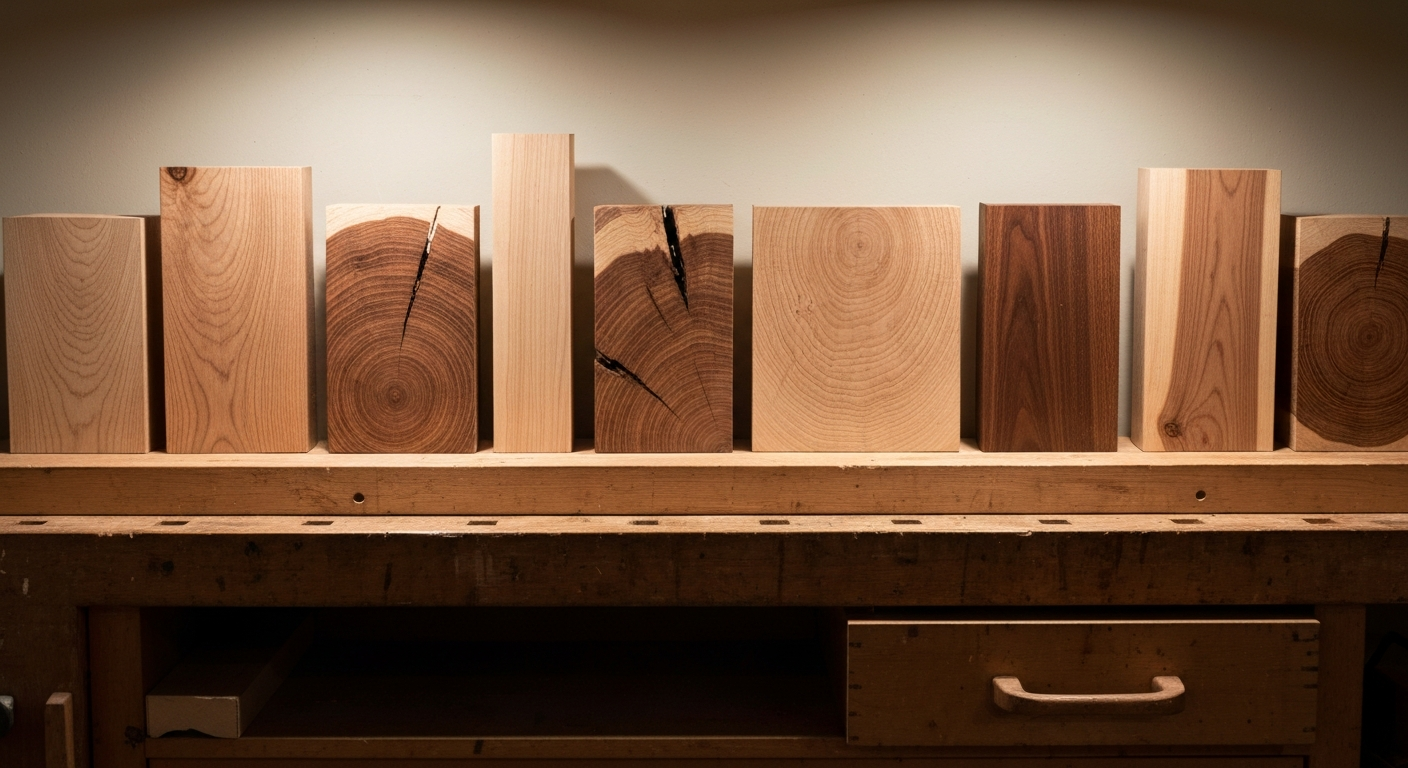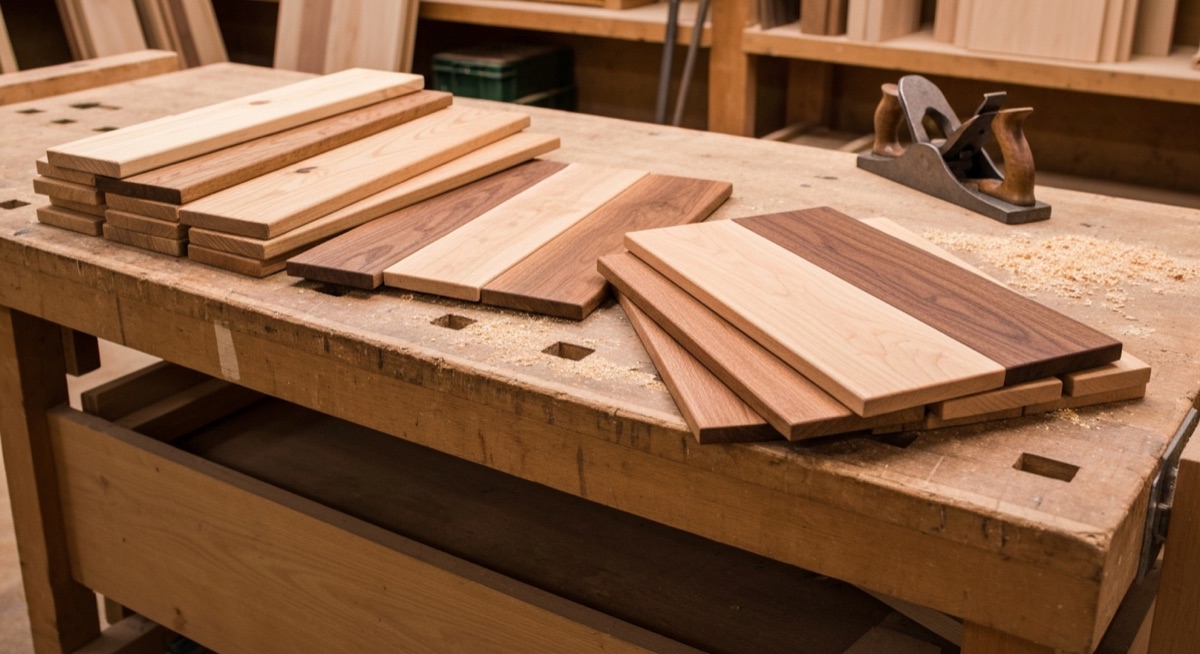
Choosing the right wood is one of the most fundamental decisions you’ll make as a beginner woodworker. It impacts not only the aesthetic appeal of your project but also its durability, the ease with which you can work, and ultimately, your enjoyment of the entire process. Walking into a lumberyard or even a big box store can feel overwhelming with the sheer variety of species, grades, and cuts available. But don’t worry – this guide is designed to demystify the world of wood, introducing you to eight excellent species for beginners and equipping you with the knowledge to make smart choices for your first projects.
Understanding the characteristics of different woods will save you time, money, and frustration. From the soft, forgiving nature of pine to the rich beauty of walnut, each species has unique properties that make it suitable for specific applications. Let’s dive in and discover the best wood for your beginner woodworking journey.
Hardwood vs Softwood for Beginners: Debunking the Naming Confusion
One of the first things you’ll encounter in woodworking is the distinction between hardwoods and softwoods. For many beginners, this immediately conjures images of wood that is literally “hard to the touch” versus “soft to the touch.” While this is often true, it’s a common misconception that can lead to confusion. The terms “hardwood” and “softwood” are actually botanical classifications, not direct indicators of the wood’s physical density or workability.
- Hardwoods come from deciduous trees, which are broad-leafed trees that typically lose their leaves in the autumn. Examples include oak, maple, cherry, and walnut. Botanically, hardwoods are angiosperms, meaning their seeds are enclosed (like in fruit or a nut). Their cellular structure tends to be more complex, often resulting in denser wood, but not always. Balsa wood, for instance, is technically a hardwood, yet it’s one of the softest and lightest woods available.
- Softwoods come from coniferous trees, which are needle- or scale-leafed trees that typically remain evergreen year-round. Examples include pine, cedar, and fir. Botanically, softwoods are gymnosperms, meaning their seeds are “naked” (like in a cone). Their cellular structure is generally simpler, often leading to less dense wood, but again, there are exceptions. Yew, a softwood, is remarkably dense and hard.
What this means for beginners: Don’t let the names dictate your perception of a wood’s workability. While many common hardwoods are harder and more challenging to work with hand tools, and many common softwoods are softer and easier to cut, there’s significant overlap. Poplar, a hardwood, is often softer and easier to work than some softwoods. For beginners, it’s more helpful to focus on a wood’s specific properties like density, grain structure, and tendency to split or blotch, rather than solely its “hardwood” or “softwood” label. Both categories offer excellent choices for your first projects.
Best Wood for Beginner Woodworking: 8 Species and When to Use Each
Here are eight species that offer a fantastic balance of workability, availability, and aesthetic appeal for beginner woodworkers.
Pine (SPF)
Hardwood/Softwood: Softwood Workability Rating: Easy. Pine is very soft and easy to cut, drill, and shape with both hand and power tools. It responds well to glue. Cost ($/board ft): $1.50 - $4.00. Pine is one of the most affordable lumber options available, making it excellent for practice and large projects on a budget. Grain/Appearance: Typically light yellow to white, often with prominent knots and a straight, simple grain pattern. It has a distinctive resinous scent. SPF stands for Spruce, Pine, Fir – these woods are often grouped together in lumberyards due to similar characteristics. Best Projects: Utility shelves, simple boxes, workshop furniture, picture frames, rustic furniture, practice joints. Its affordability makes it perfect for learning basic cuts and joinery without fear of “wasting” expensive material. It’s also a good choice for painted projects where the natural grain isn’t the focus. What to Watch:
- Dents & Scratches: Its softness means it dents and scratches very easily, so it’s not ideal for high-wear surfaces.
- Knots: Knots can be hard and difficult to cut through, sometimes chipping out. They can also bleed sap, especially if the wood isn’t fully dry or if exposed to heat, which can affect finishes.
- Splitting: Pine can split easily, especially when screwing or nailing close to an edge or end grain. Always pre-drill pilot holes.
- Blotching: When staining, pine is notorious for blotching unevenly due to its varied density. Using a wood conditioner or gel stain can help achieve a more consistent finish.
Poplar
Hardwood/Softwood: Hardwood Workability Rating: Easy. Despite being a hardwood, poplar is relatively soft, straight-grained, and very easy to work with. It cuts, planes, and sands smoothly. Cost ($/board ft): $3.00 - $6.00. Poplar is one of the most inexpensive hardwoods, making it a great step up from pine. Grain/Appearance: Ranges from creamy white to pale yellow or greenish-brown, sometimes with streaks of purple or gray. The grain is generally straight and uniform, making it less visually appealing than other hardwoods for natural finishes, but excellent for painted projects. Best Projects: Painted furniture (cabinets, dressers, trim), drawer boxes, hidden structural components, jigs and fixtures, practice pieces for more complex joinery. It’s stable and takes paint exceptionally well. What to Watch:
- Color Variation: The green and purple streaks can be quite pronounced and don’t always fade significantly, which can be an issue if you’re aiming for a consistent natural finish.
- Softness: While easier to work, it’s still relatively soft for a hardwood and can dent more easily than oak or maple.
- Fuzzy Grain: Can sometimes develop a “fuzzy” grain when sanded, especially if not using sharp sandpaper or if sanding against the grain. Finish sanding with fine grits is important.
- Staining: Like pine, poplar can blotch when stained, though usually less severely. Wood conditioner is still recommended for a more even finish.
Cedar
Hardwood/Softwood: Softwood Workability Rating: Easy to Moderate. Cedar is soft and easy to cut and shape, but its distinctive aroma and often knotty character can present unique challenges. Cost ($/board ft): $4.00 - $8.00. Prices vary significantly depending on the type (e.g., Aromatic Cedar vs. Western Red Cedar) and grade. Grain/Appearance:
- Aromatic Cedar (Eastern Red Cedar): Known for its striking red and white streaks and strong, pleasant scent. Often very knotty.
- Western Red Cedar: Typically reddish-brown, often with a straighter grain and fewer knots than aromatic cedar. Less aromatic but very weather-resistant. Best Projects:
- Aromatic Cedar: Chests, closet lining, drawer bottoms (for insect repellent properties), small decorative boxes.
- Western Red Cedar: Outdoor furniture, raised garden beds, deck components, fence pickets, birdhouses, siding. Its natural resistance to rot and insects makes it ideal for exterior use. What to Watch:
- Knots: Especially with aromatic cedar, knots are common and can be brittle, prone to chipping out during cutting.
- Splitting: Cedar can be quite brittle and prone to splitting, especially when nailing or screwing near edges. Always pre-drill.
- Dust: Cedar dust can be an irritant for some people, causing respiratory or skin reactions. Always wear a dust mask and work in a well-ventilated area.
- Oils: The natural oils that give cedar its aroma and rot resistance can sometimes bleed through finishes, particularly lighter ones. Use a shellac-based primer if painting.
Soft Maple
Hardwood/Softwood: Hardwood Workability Rating: Moderate. Soft maple is harder than pine or poplar but still quite manageable for beginners with sharp tools. It planes, sands, and machines well. Cost ($/board ft): $5.00 - $8.00. More expensive than pine or poplar, but generally more affordable than hard maple, oak, or cherry. Grain/Appearance: Creamy white to light brown, with a fine, even, and often subtle grain pattern. It can sometimes exhibit “figure” like curly or birdseye patterns, though these are less common in general lumber. Despite the name, “soft” maple is still a durable wood. Best Projects: Furniture (tables, chairs, cabinets), cutting boards (when properly sealed), turned items, painted projects where a smooth, durable surface is desired. It’s a great choice for furniture that will see moderate use. What to Watch:
- Hardness: While “soft” for a maple, it’s still denser than pine or poplar, meaning dull tools will lead to tearout or burning. Keep your blades sharp.
- Blotching: Maple is highly prone to blotching when stained, similar to pine and poplar, but often more pronounced due to its dense, even grain. Wood conditioner is almost essential for even staining.
- Tearout: Can be prone to tearout when planing or routing against the grain, especially if the grain is figured. Take light passes.
- Color Shift: Can yellow slightly over time, especially with exposure to UV light.
Red Oak
Hardwood/Softwood: Hardwood Workability Rating: Moderate. Red oak is a classic hardwood that is relatively easy to work with power tools, though it requires more effort with hand tools than softer woods. It glues well and holds fasteners securely. Cost ($/board ft): $6.00 - $10.00. Widely available and a good mid-range price for a durable hardwood. Grain/Appearance: Light to medium brown with a distinctive open, coarse grain pattern. It often features prominent ray flecks (medullary rays) that create a shimmering effect, especially in quartersawn boards. The grain is generally straight. Best Projects: Furniture (tables, chairs, desks, cabinets), flooring, trim, interior doors. Its durability and classic appearance make it excellent for pieces that need to withstand daily use. It’s a fantastic choice for learning traditional joinery like mortise and tenon. What to Watch:
- Open Grain: The prominent open grain requires more pore filling if you want a perfectly smooth, glass-like finish. Otherwise, dust can collect in the pores.
- Tearout: Can be prone to tearout, especially when planing or routing across the grain or around knots. Sharp tools and proper technique are crucial.
- Heavy: Red oak is a dense wood, making projects heavy and sometimes challenging to move during assembly.
- Splintering: The coarse grain can splinter easily if not handled carefully, especially on edges and corners.
Walnut
Hardwood/Softwood: Hardwood Workability Rating: Moderate to Challenging. Walnut is a beautiful hardwood that works reasonably well with sharp tools, though it’s denser than oak or maple. It carves and turns beautifully and takes a finish exceptionally well. Cost ($/board ft): $10.00 - $20.00+. Walnut is a premium hardwood, significantly more expensive than the other woods on this list. Grain/Appearance: Rich, dark brown to purplish-black, often with lighter sapwood streaks. The grain is typically straight but can sometimes be wavy, creating interesting figure. It has a medium texture and a natural luster that deepens with oil finishes. Best Projects: Fine furniture (tabletops, chairs, cabinets), decorative boxes, small turned items, accents, heirloom pieces. Its stunning appearance makes it ideal for projects where the natural beauty of the wood is the star. Given its cost, it’s often used for smaller, more refined projects or as an accent. What to Watch:
- Cost: Its high price means mistakes are costly. Practice on less expensive wood first.
- Dust: Walnut dust can be an irritant for some people, causing respiratory issues. Always use proper dust collection and wear a mask.
- Sapwood: The lighter sapwood can be a stark contrast to the dark heartwood. Some woodworkers embrace this, while others try to minimize or remove it for a more uniform look.
- Blotching: While generally taking stain well, it can still blotch if not prepped properly, though its natural dark color often means staining isn’t necessary. An oil finish usually brings out its best.
Birch Plywood
Hardwood/Softwood: Plywood (composed of thin layers, usually birch veneer on the outside) Workability Rating: Easy to Moderate. Plywood is generally stable and easy to cut with power tools. It doesn’t split along grain lines like solid wood. Cost ($/board ft): $3.00 - $7.00 (calculated from sheet price). A 3/4” 4x8 sheet might cost $60-$100, which works out to roughly $2-$3 per board foot, but higher grades are more. Grain/Appearance: Light, uniform, creamy-white to pale yellow grain, very similar to solid birch. High-quality birch plywood (like Baltic birch) has multiple thin, void-free plies, making its edges attractive. Standard birch plywood may have fewer, thicker plies with internal voids. Best Projects: Carcases for cabinets, bookshelves (/diy-bookshelf-plans-every-skill-level/), drawer boxes, jigs, shop fixtures, tabletops, workbenches. Its stability and resistance to movement make it ideal for large, flat panels. What to Watch:
- Edge Treatment: The exposed plies on the edges are often not considered aesthetically pleasing for fine furniture unless specifically designed for, or covered with edge banding.
- Chipping/Tearout: The top veneer can chip or tear out when cutting, especially with dull blades or improper cutting techniques. Use a sharp blade designed for plywood, and score the cut line or use a sacrificial fence.
- Voids: Lower quality plywood can have internal voids that can weaken the panel or cause issues when cutting or routing. Inspect sheets carefully.
- Sanding: Sanding through the thin top veneer is easy to do, especially with power sanders. Be gentle.
Cherry
Hardwood/Softwood: Hardwood Workability Rating: Moderate. Cherry is a joy to work with. It’s relatively soft for a hardwood, has a fine, even grain, and cuts, planes, sands, and machines beautifully with sharp tools. It takes finishes exceptionally well. Cost ($/board ft): $8.00 - $15.00. A premium hardwood, but generally more affordable than walnut. Grain/Appearance: Pale pinkish-brown when fresh, darkening to a rich reddish-brown or deep russet with age and exposure to light (often called “patina”). The grain is fine, straight, and smooth, often with small, dark gum flecks. Best Projects: Fine furniture (cabinets, tables, chairs, dressers), jewelry boxes, turned items, musical instruments, decorative carvings. Its beautiful aging process and luxurious feel make it perfect for heirloom-quality pieces. What to Watch:
- Color Changes: The dramatic color shift over time is a key characteristic but can be unexpected for beginners. If you want to accelerate it, expose the finished piece to sunlight.
- Blotching: Like maple and pine, cherry can blotch when stained, though its natural beauty often means only a clear finish (like oil or shellac) is needed to enhance its color.
- Softness (for a hardwood): While generally durable, it’s softer than oak or hard maple and can be prone to dents and scratches if not protected.
- Gum Pockets: Small, dark gum pockets are a natural feature of cherry and are generally accepted as part of its character.
Where to Buy Wood for Your Projects
The source of your lumber can significantly impact quality, selection, and price. For beginners, understanding the differences is key.
Big Box Stores (e.g., Home Depot, Lowe’s)
- Pros: Convenient, readily accessible, open long hours, pre-milled to common dimensions (e.g., 2x4, 1x6), good for common softwoods (pine, SPF), some basic hardwoods (oak, poplar), and plywood. Prices for common softwoods are often very competitive.
- Cons: Limited selection of species and sizes, lower quality control (often warped or damaged boards), poor storage conditions (can lead to moisture issues), staff may have limited woodworking knowledge. Hardwood selection is usually very basic and often overpriced for the quality.
- Best for: Practice lumber (pine), utility projects, small quantities of common softwoods, basic plywood for jigs.
Lumberyards (Local Dealers)
- Pros: Better quality control, wider selection of species (hardwoods, softwoods, exotics), more consistent dimensions, knowledgeable staff who can offer advice, often sell roughsawn lumber which can be more economical (if you have milling tools), some offer milling services.
- Cons: Less convenient for many, may have shorter hours, prices can be higher for small quantities of specialty wood. Can be intimidating for a first-timer.
- Best for: Stepping up to better quality hardwoods (oak, maple, cherry), larger quantities, specific dimensions, advice on species.
Hardwood Dealers (Specialty Suppliers)
- Pros: Best quality, vast selection of domestic and exotic hardwoods, often sell roughsawn lumber for the lowest prices, highly knowledgeable staff, can provide milling services.
- Cons: Can be very intimidating for beginners, often require purchasing larger quantities (e.g., by the board foot in roughsawn), prices are higher for premium species, may be far from your location.
- Best for: When you’ve gained experience and are ready for specific, high-quality hardwoods for fine furniture or specialized projects, or when buying in bulk.
Beginner Advice: Start with big box stores for your initial pine projects. Once you’re comfortable, transition to a local lumberyard for your first hardwood purchases like poplar or oak. Don’t be afraid to ask questions! Most lumberyard staff are happy to help a budding woodworker.
Wood to AVOID as a Beginner
While experimenting is part of learning, some woods and wood conditions can lead to unnecessary frustration and wasted effort for beginners.
- Exotic Hardwoods (e.g., Wenge, Padauk, Purpleheart, Ipe): These woods are often incredibly dense, hard, and difficult to work with hand tools. They can dull blades quickly, cause severe tearout, and some contain irritants or toxins. They are also very expensive, making mistakes costly. Save these for when you have more experience and specialized tools.
- Green/Wet Lumber: This is wood that has not been properly dried (either air-dried or kiln-dried) and still contains a high moisture content. It’s usually heavier, feels damp, and might have signs of mold or mildew. Green lumber is highly unstable; it will warp, twist, cup, and shrink unpredictably as it dries, ruining your project. Always look for “kiln-dried” or “KD” lumber.
- Warped, Cupped, or Twisted Boards: Even kiln-dried lumber can sometimes be stored improperly, leading to defects. Avoid boards that are visibly bowed (curved along their length), cupped (curved across their width), or twisted. While experienced woodworkers can sometimes mill these flat, it requires specialized tools and significant material removal, which is not ideal for beginners.
- Pressure-Treated Lumber (for indoor projects): Pressure-treated lumber is chemically treated to resist rot and insects for outdoor use. It’s often rough, prone to warping, and the chemicals make it unsuitable for indoor furniture or anything that will come into contact with food or skin. The dust from cutting it is also hazardous. Stick to untreated lumber for interior projects.
- Heavily Reclaimed Wood (initially): While beautiful, reclaimed wood can hide nails, screws, dirt, and other debris that can severely damage your tools. It often requires significant cleaning and milling to be usable. It’s a fantastic resource, but best approached after you’ve developed your basic skills and have proper metal detection and milling equipment.
Reading a Board: What to Look For
Before you even pick up a tool, learning to “read” a board is a crucial skill. It helps you select quality lumber and understand how the wood will behave.
- Grain Direction: The grain refers to the arrangement of wood fibers.
- Long Grain: Fibers run parallel to the length of the board. This is the strong direction for cutting, planing, and joining.
- End Grain: The cross-section of the fibers, visible at the ends of a board. Cutting across end grain is generally harder, and glue joints on end grain are very weak. Always try to orient your project to work with the long grain. Understanding grain direction is vital for preventing tearout when planing or routing.
- Knots: These are sections where a branch grew from the tree trunk.
- Tight Knots: Fully integrated into the board, usually stable. Can be decorative but are harder and can chip out during cutting.
- Loose/Dead Knots: Not fully integrated, can fall out, leaving a hole. Avoid these for structural pieces.
- Pin Knots: Small, usually stable.
- Knots weaken the wood around them and can cause tearout. Try to position cuts to avoid them where strength is critical, or embrace them for a rustic look.
- Cupping, Bowing, and Twisting: These are common forms of wood movement caused by uneven drying or moisture absorption.
- Cupping: The board curves across its width, like a shallow bowl.
- Bowing: The board curves along its length, like an arch.
- Twisting: The board has a spiral distortion.
- Always sight down the length and across the width of a board before buying. Avoid severely warped boards, as they are difficult to flatten and will waste material.
- Moisture Content: The amount of water in the wood. Wood needs to be dried (kiln-dried or air-dried) to a stable moisture content (typically 6-10% for indoor projects).
- Why it matters: Wet wood will shrink, warp, and crack as it dries. Dry wood is stable.
- How to check: A moisture meter gives a precise reading. Without one, look for “Kiln Dried” (KD) stamps. Visually, dry wood feels lighter, and you won’t see obvious signs of mold or wet spots. Wood stored outdoors or in humid conditions might re-absorb moisture.
For a deeper dive into wood characteristics, check out our guide on /wood-types-explained-beginners/.
Related Reading
Frequently Asked Questions
What is the cheapest wood for beginners?
Pine (especially SPF lumber from big box stores) is consistently the most affordable option, making it ideal for practice and utility projects. Poplar is the next step up, offering hardwood characteristics at a very reasonable price, especially for painted pieces.
What is the best wood for furniture?
There isn’t one “best” wood, as it depends on the desired look, durability, and budget. For beginners, Red Oak is an excellent all-around choice for durable, classic furniture. Soft Maple and Cherry are also fantastic for finer furniture once you’re comfortable with harder woods. Poplar is superb for painted furniture due to its smooth finish and stability.
Plywood vs. Solid Wood: Which should I use?
Both have their place! Solid wood offers natural beauty, can be carved, shaped, and joined in traditional ways, and can be refinished many times. However, it’s prone to seasonal movement (expansion and contraction). Plywood is incredibly stable, resistant to warping, strong, and available in large, consistent sheets. It’s often cheaper per square foot than solid wood for large panels.
- Use solid wood for: Tabletops, legs, frames, doors, decorative elements, projects where natural grain and traditional joinery (/beginner-woodworking-joints-guide/) are desired.
- Use plywood for: Cabinet carcases, drawer boxes, shelves (/diy-bookshelf-plans-every-skill-level/), jigs, and any project requiring large, stable, flat panels. Many projects combine both, using plywood for structural elements and solid wood for faces and trim.
How do I tell if wood is dry?
The most reliable way is with a moisture meter. For visual cues, look for a “Kiln Dried” (KD) stamp, check for a consistent weight (wet wood is heavier), and listen for a clear, resonant sound when tapped (dull thud can indicate moisture). Avoid wood that feels damp, has mold, or shows signs of significant cracking or splitting (which can happen during rapid, uncontrolled drying).
What is the best wood for outdoor projects?
Cedar (especially Western Red Cedar) is a fantastic choice due to its natural resistance to rot, insects, and moisture. Pressure-treated pine is another common and affordable option, though it’s typically used for structural elements and less refined projects. For premium outdoor furniture, hardwoods like teak or ipe are superior but are very expensive and challenging for beginners.
Conclusion
Embarking on your woodworking journey is an exciting adventure, and choosing the right wood is your first crucial step. By understanding the characteristics of species like pine, poplar, cedar, soft maple, red oak, walnut, birch plywood, and cherry, you can confidently select the perfect material for your projects. Remember to start simple, prioritize practice, and always use sharp tools (/best-beginner-woodworking-tools/) and proper safety. Don’t be afraid to experiment, learn from your mistakes, and most importantly, enjoy the satisfying process of bringing your creations to life. Happy woodworking!