Why Vinyl Flooring Took Over
Ten years ago, vinyl flooring meant cheap peel-and-stick tiles in a rental apartment. Today, luxury vinyl plank and tile flooring is the fastest-growing flooring category in North America. It’s waterproof, it installs over almost any subfloor, it looks convincingly like hardwood or stone, and it costs a fraction of the real thing. If you’re building or renovating in 2026, vinyl flooring deserves serious consideration — even if you could afford hardwood.
But the terminology is a mess. LVP, LVT, SPC, WPC, rigid core, flexible, click-lock, glue-down — the acronyms pile up and product listings blur together. This guide untangles all of it so you can buy with confidence.
LVP vs LVT: What’s the Difference?
LVP (Luxury Vinyl Plank) comes in long rectangular planks that mimic hardwood. Standard dimensions are 6 to 9 inches wide and 36 to 72 inches long. The surface is printed and textured to look like oak, walnut, hickory, or other wood species.
LVT (Luxury Vinyl Tile) comes in square or rectangular tiles that mimic stone, ceramic, or concrete. Standard sizes are 12x12, 12x24, or 18x18 inches. Same construction as LVP, different shape and pattern.
The construction is identical. The only difference is the form factor and the look. Most people shopping for “vinyl plank flooring” want the wood-look plank format.
Core Types: SPC vs WPC
This is the most important distinction in modern vinyl flooring.
SPC (Stone Plastic Composite)
SPC core is made from limestone powder and PVC. It’s extremely dense, thin (typically 4-6mm total), and rigid. SPC floors are harder underfoot, more dent-resistant, and less affected by temperature changes. They’re the better choice for commercial spaces, high-traffic areas, and over concrete subfloors. The downside is they’re less comfortable to stand on for long periods.
WPC (Wood Plastic Composite)
WPC core uses a foamed polymer core that’s thicker (typically 6-8mm total) and softer underfoot. WPC floors feel warmer and more comfortable than SPC, absorb more sound, and are more forgiving on slightly uneven subfloors. The tradeoff is they’re slightly more susceptible to dents from heavy furniture and more affected by extreme temperature swings.
| Feature | SPC | WPC |
|---|---|---|
| Core material | Limestone + PVC | Foamed polymer |
| Typical thickness | 4-6mm | 6-8mm |
| Comfort underfoot | Firm | Softer, warmer |
| Dent resistance | Excellent | Good |
| Temperature stability | Excellent | Good |
| Sound absorption | Low (needs underlayment) | Better built-in |
| Best for | High traffic, concrete slab, commercial | Bedrooms, living areas, comfort priority |
Wear Layer Ratings: Why They Matter
The wear layer is the clear top coating that protects the printed design from scratches, scuffs, and UV fading. It’s measured in mils (thousandths of an inch). This is the single most important spec for long-term durability.
- 6-12 mil: Light residential. Fine for bedrooms and low-traffic rooms. Budget products live here. Expect 5-10 years before visible wear.
- 20 mil: Standard residential. Handles living rooms, kitchens, and hallways. The sweet spot for most homeowners. Expect 15-20 years.
- 28 mil+: Heavy residential and light commercial. Handles mudrooms, entryways, rental properties, and commercial spaces. Expect 20-25+ years.
If you’re investing in flooring for a home you plan to stay in, 20 mil is the minimum I’d recommend. The price difference between 12 mil and 20 mil is usually $0.50-1.00 per square foot — well worth it for double the lifespan.
Vinyl vs Hardwood vs Laminate
| Feature | Vinyl (LVP) | Hardwood | Laminate |
|---|---|---|---|
| Waterproof | Yes | No | No (water-resistant) |
| Scratch resistance | Good to excellent | Moderate (varies by species) | Good |
| Refinishable | No | Yes (multiple times) | No |
| DIY install | Easy (click-lock) | Moderate to hard | Easy (click-lock) |
| Cost per sq ft | $2-7 | $6-15+ | $1-5 |
| Lifespan | 15-25 years | 50-100 years | 10-25 years |
| Resale value | Good | Excellent | Moderate |
| Comfort underfoot | Good (WPC) to firm (SPC) | Warm, natural | Firm |
Hardwood wins on longevity and resale value. Vinyl wins on waterproofing, ease of installation, and cost. Laminate sits in between but lacks true waterproofing. For kitchens, bathrooms, basements, and laundry rooms, vinyl is the clear choice. For a formal living room or dining room in a forever home, hardwood is still king.
For a deeper comparison, see our hardwood vs laminate guide.
Installation Methods
Click-Lock (Floating)
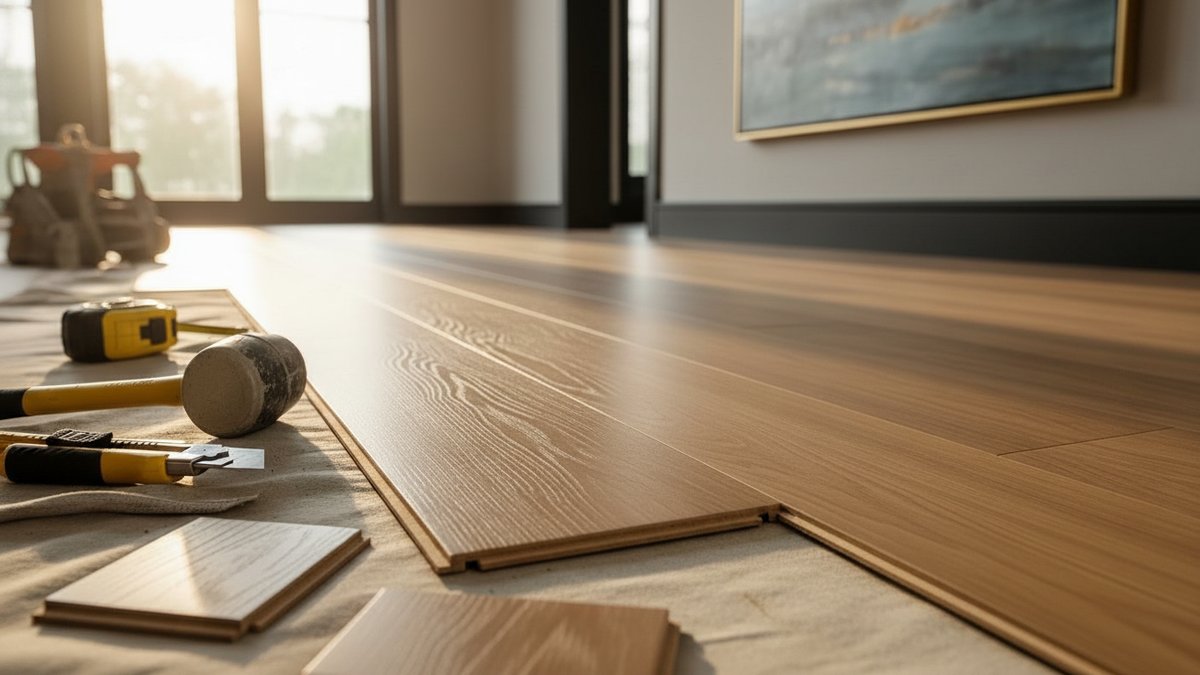
The most common and DIY-friendly method. Planks click together at the edges and float over the subfloor without adhesive. An underlayment pad sits between the subfloor and the flooring. Leave a 1/4-inch expansion gap around the perimeter, covered by baseboard.
Glue-Down
Each plank is adhered directly to the subfloor with vinyl flooring adhesive. This creates a more stable, permanent installation that’s better for large open areas and commercial settings. Harder to remove and requires a clean, level subfloor.
Loose Lay
Heavy, thick planks with a friction backing that simply lay on the subfloor without clicking or gluing. Easy to install and replace individual planks, but requires a very flat subfloor.
For most homeowners, click-lock is the way to go. It’s fast, forgiving, and you can do an entire room in a day. We have a complete step-by-step LVP installation guide if you’re ready to tackle it yourself.
Underlayment: Do You Need It?
If your vinyl flooring doesn’t have a pre-attached underlayment pad, yes. Underlayment serves three purposes: it smooths minor subfloor imperfections, adds sound dampening, and provides a moisture barrier over concrete.
Many mid-range and premium vinyl planks come with underlayment pre-attached to the bottom of each plank. If yours does, do not add a second layer — it makes the floor too soft and can cause the click-lock joints to fail.
Best Rooms for Vinyl Plank Flooring
- Kitchens: Waterproof, easy to clean, handles dropped pots. Ideal.
- Bathrooms: Fully waterproof including subfloor splashes. Use SPC for best water resistance.
- Basements: Waterproof over concrete. Use SPC with a vapor barrier underlayment.
- Laundry rooms: Handles washer leaks without damage.
- Living rooms and bedrooms: WPC for comfort. 20 mil+ wear layer for durability.
- Entryways and mudrooms: 28 mil wear layer to handle grit and heavy traffic.
Best Vinyl Plank Brands in 2026
LifeProof (Home Depot exclusive). SPC core, 22 mil wear layer, pre-attached underlayment. Starting around $3.50/sq ft. The best value in rigid core vinyl. Wide color selection and consistently good reviews.
COREtec. The brand that popularized WPC vinyl. COREtec Plus and Pro Plus lines offer excellent quality, realistic textures, and lifetime residential warranties. Expect $4-6/sq ft. Sold through specialty flooring retailers.
Shaw Floorte. Available in both SPC (Floorte Pro) and WPC (Floorte Elite) formats. Shaw is one of the largest flooring manufacturers in the world, and the Floorte line benefits from their printing and texturing technology. $3-6/sq ft depending on line.
Mohawk RevWood. Technically a hybrid product (wood-composite core with waterproof surface), RevWood bridges the gap between vinyl and laminate. Realistic wood look with waterproof performance. $3-5/sq ft.
Karndean. Premium LVT/LVP with the most realistic textures and patterns in the category. Glue-down and click-lock options. Expensive at $5-8/sq ft, but the look and feel are a step above mass-market options.
Mannington Adura. Available in three tiers: Adura Flex (glue-down), Adura Max (WPC click), and Adura Rigid (SPC click). Mannington’s design catalog is excellent, and their products consistently test well for wear resistance. $4-7/sq ft.
Final Verdict
For most homeowners installing flooring themselves, a click-lock SPC vinyl plank with a 20 mil wear layer and pre-attached underlayment is the best combination of durability, ease of installation, and value. LifeProof at Home Depot hits this spec at around $3.50/sq ft and is the easiest to source.
If comfort is your priority (bedrooms, living rooms), go WPC. If durability is your priority (kitchens, basements, rentals), go SPC with 20 mil or higher. And whatever you choose, make sure you’re ready to install it — our LVP installation guide walks you through every step.