3D Printer Filament Types Explained: Your Ultimate Guide
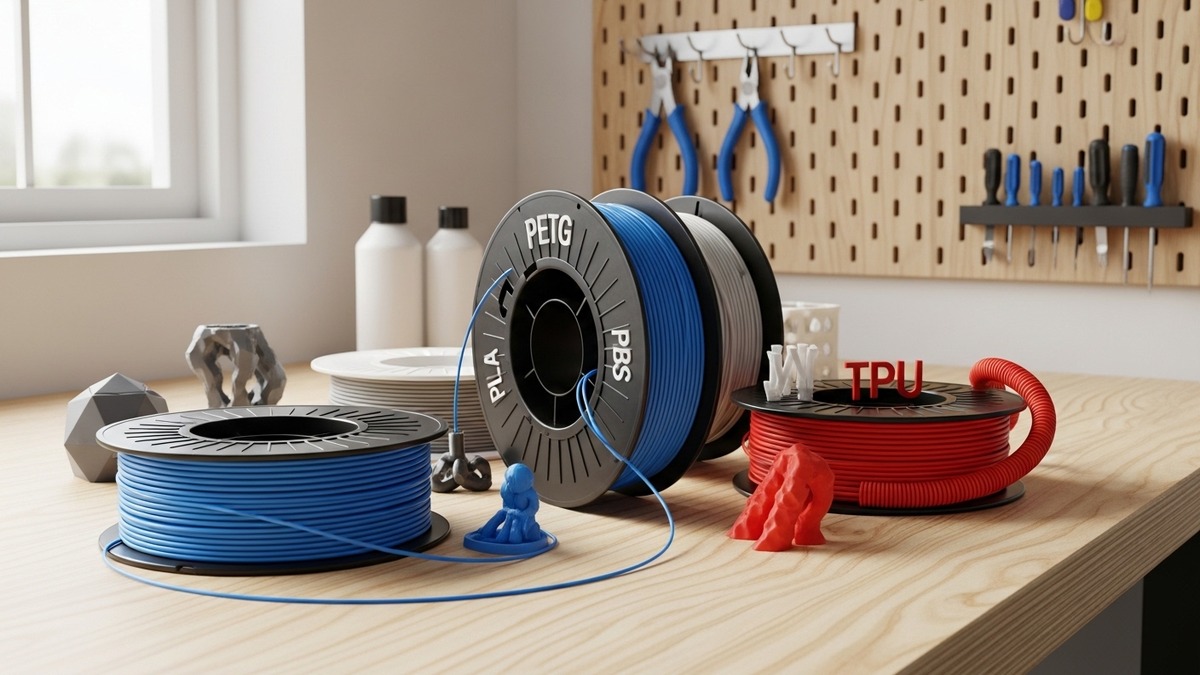
Embarking on the journey of 3D printing is an exciting venture, filled with endless possibilities for creation and innovation. But before you can bring your digital designs into the physical world, you’ll encounter a fundamental choice: which filament to use? The filament is the lifeblood of your 3D printer, the raw material that dictates not only the physical properties of your prints but also the ease and success of the printing process itself.
Choosing the right filament can feel overwhelming, especially for newcomers navigating their first 3D printer. This comprehensive guide is designed to demystify the most common 3D printer filament types, breaking down their characteristics, strengths, weaknesses, and ideal applications. Whether you’re looking to print decorative models, functional prototypes, or robust end-use parts, understanding these materials is crucial. This guide serves as a pillar piece, an essential companion to your journey with the best 3D printers for beginners. Let’s dive in and unlock the potential of your 3D printer, one filament at a time.
PLA (Polylactic Acid)
What it is: PLA is arguably the most popular and widely used 3D printer filament, especially among beginners. It’s a biodegradable thermoplastic derived from renewable resources like corn starch, tapioca roots, or sugarcane. Its ease of use and environmental friendliness make it a favorite in the 3D printing community.
Strengths:
- Easy to Print: PLA is known for its low warping tendencies and excellent layer adhesion, making it forgiving for new users.
- No Enclosure Needed: It doesn’t typically require an enclosed print chamber.
- Low Odor: Produces a minimal, often slightly sweet, odor during printing, unlike some other filaments.
- Wide Color Range: Available in an extensive array of colors, including translucent, metallic, and specialty finishes.
- Good Detail: Capable of producing prints with fine details and a smooth finish.
Weaknesses:
- Brittle: Finished PLA prints can be brittle and prone to breaking under stress or impact.
- Low Heat Resistance: It has a relatively low glass transition temperature (around 60°C), meaning prints can deform or soften in hot environments (e.g., a car on a sunny day).
- UV Degradation: Prolonged exposure to UV light can cause PLA to become brittle and degrade over time.
- Limited Chemical Resistance: Not highly resistant to many chemicals.
Print Temp Range: 190-220°C Bed Temp: 50-60°C (optional but recommended for better adhesion) Enclosure Needed: No Best Applications: Decorative models, prototypes, toys, artistic prints, educational projects, low-stress functional parts, jigs and fixtures for light use. Beginner-Friendliness: 5/5 (Excellent)
PETG (Polyethylene Terephthalate Glycol-modified)
What it is: PETG is a versatile thermoplastic that combines the best aspects of PLA and ABS. It’s a modified version of polyethylene terephthalate (PET), the plastic used in water bottles, with glycol added to make it more durable and easier to print. PETG is known for its strength, flexibility, and good layer adhesion.
Strengths:
- Strong and Durable: Offers significantly better strength, impact resistance, and durability than PLA.
- Moderate Flexibility: Possesses a degree of flexibility, making it less brittle than PLA.
- Good Layer Adhesion: Provides excellent adhesion between layers, resulting in strong parts.
- Chemical Resistance: Resists many chemicals, oils, and greases.
- Weather Resistant: Better suited for outdoor applications than PLA due to its resistance to moisture and UV light (though ASA is better for prolonged outdoor exposure).
- Food-Safe (Some Grades): Certain PETG filaments are certified food-safe, making them suitable for food contact applications (always check the manufacturer’s specifications).
Weaknesses:
- Stringing and Oozing: Can be prone to stringing (fine threads of plastic) and oozing, requiring careful retraction settings.
- Hygroscopic: Absorbs moisture from the air, which can lead to print quality issues if not stored properly.
- Adhesion Issues: Can stick too well to some build surfaces (e.g., bare glass), potentially damaging the surface or the print upon removal.
- Slightly Harder to Print: Requires more careful calibration of print settings (temperature, retraction, cooling) than PLA.
Print Temp Range: 220-250°C Bed Temp: 70-80°C Enclosure Needed: Not strictly necessary, but a draft-free environment can improve print quality. Best Applications: Functional prototypes, mechanical parts, protective components, outdoor parts (e.g., garden tools), containers, bottle holders, drone frames. Beginner-Friendliness: 4/5 (Good, but requires a bit more fine-tuning than PLA)
ABS (Acrylonitrile Butadiene Styrene)
What it is: ABS is a robust engineering-grade thermoplastic, well-known for its use in LEGO bricks. It’s a tough, impact-resistant material with good heat resistance. While once a staple in consumer 3D printing, its challenges have led many to opt for PETG or ASA for similar applications.
Strengths:
- High Strength and Toughness: Extremely durable and resistant to impact, making it suitable for demanding applications.
- Heat Resistance: Withstands higher temperatures than PLA and PETG without deforming.
- Post-Processing Friendly: Can be easily sanded, machined, and even smoothed with acetone vapor for a glossy finish.
- Lightweight: Relatively light compared to its strength.
Weaknesses:
- Warping and Cracking: Highly prone to warping, shrinking, and cracking due to temperature fluctuations during printing. Requires a heated bed and often an enclosure.
- Strong Fumes: Emits strong, potentially unpleasant and harmful fumes (styrene) during printing, necessitating good ventilation.
- UV Degradation: Susceptible to degradation and discoloration when exposed to UV light, making it less ideal for outdoor use.
- Hygroscopic: Absorbs moisture, leading to print quality issues if not stored dry.
Print Temp Range: 230-260°C Bed Temp: 90-110°C Enclosure Needed: Highly Recommended (often essential) to maintain a stable print environment and prevent warping. For more information on enclosures, consider exploring the best 3D printer enclosure 2026. Best Applications: Functional prototypes, automotive parts, tool handles, electronic enclosures, snap-fit parts, models requiring post-processing. Beginner-Friendliness: 2/5 (Difficult)
TPU (Thermoplastic Polyurethane)
What it is: TPU is a flexible, rubber-like thermoplastic, often referred to as “flexible filament.” It combines the properties of plastic and rubber, offering high elasticity, durability, and excellent abrasion resistance.
Strengths:
- Highly Flexible: Can be bent, stretched, and compressed without breaking or deforming permanently.
- Durable and Impact Resistant: Excellent resistance to impact, abrasion, and tearing.
- Good Layer Adhesion: Layers bond exceptionally well, creating strong, cohesive parts.
- Chemical Resistance: Resists many oils, greases, and solvents.
- Vibration Dampening: Its elastic properties make it suitable for absorbing vibrations.
Weaknesses:
- Difficult to Print: Can be challenging to print due to its flexibility. Prone to tangling, jamming, stringing, and extrusion issues, especially on Bowden-style extruders. Direct drive extruders are highly recommended.
- Slow Print Speed: Requires very slow print speeds to achieve good results.
- Hygroscopic: Absorbs moisture readily, impacting print quality.
- Bridging and Overhangs: Can struggle with complex geometries that require significant bridging or overhangs.
Print Temp Range: 220-240°C Bed Temp: 30-60°C (or off, with appropriate adhesive) Enclosure Needed: No Best Applications: Phone cases, gaskets, seals, RC tires, wearable items, flexible prototypes, vibration dampeners, protective covers, shoe insoles. Beginner-Friendliness: 2/5 (Difficult, requires specific printer setups and patience)
ASA (Acrylonitrile Styrene Acrylate)
What it is: ASA is an engineering-grade thermoplastic that is often considered the “better ABS.” It shares many of ABS’s mechanical properties but boasts superior UV resistance and weatherability, making it ideal for outdoor applications.
Strengths:
- UV and Weather Resistant: Excellent resistance to UV radiation, moisture, and extreme temperatures, making it perfect for outdoor use without degrading or discoloring.
- High Strength and Toughness: Comparable to ABS in terms of impact resistance and durability.
- Heat Resistance: Maintains its structural integrity at higher temperatures.
- Good Aesthetics: Often produces a slightly matte finish, which can be desirable for aesthetic parts.
- Less Warping than ABS: While still prone to warping, it’s generally less severe than with ABS.
- Slightly Less Fumes: Emits less noticeable fumes than ABS, though ventilation is still crucial.
Weaknesses:
- Warping: Still prone to warping, requiring a heated bed and often an enclosure.
- Fumes: While less than ABS, it still produces fumes that require good ventilation.
- Hygroscopic: Absorbs moisture, requiring dry storage for optimal print quality.
- Higher Print Temperatures: Requires higher extrusion and bed temperatures, similar to ABS.
Print Temp Range: 240-260°C Bed Temp: 90-110°C Enclosure Needed: Highly Recommended (often essential) for consistent quality and to prevent warping. For more information on enclosures, consider exploring the best 3D printer enclosure 2026. Best Applications: Outdoor enclosures, automotive exterior parts, drone components, electrical housings, garden accessories, weather-exposed prototypes. Beginner-Friendliness: 2/5 (Difficult, similar to ABS but with outdoor advantages)
Nylon (Polyamide)
What it is: Nylon is a family of synthetic polymers (polyamides) renowned for their exceptional strength, durability, and flexibility. It’s a high-performance engineering material widely used in industrial applications, now accessible for 3D printing.
Strengths:
- Extremely Strong and Durable: Offers incredible tensile strength, making it suitable for highly stressed parts.
- High Impact Resistance: Can withstand significant impacts without breaking.
- Flexibility: Possesses a unique combination of strength and flexibility, allowing for robust parts that can bend without snapping.
- Low Friction: Has a naturally slippery surface, making it ideal for gears, bearings, and other moving parts.
- Chemical Resistance: Resists many chemicals, oils, and alkalis.
- Abrasion Resistance: Highly resistant to wear and tear.
Weaknesses:
- Extremely Hygroscopic: Nylon is notoriously prone to absorbing moisture from the air, even more so than PETG or ABS. Wet nylon leads to bubbling, poor layer adhesion, and very weak prints. Requires meticulous drying and storage.
- High Printing Temperatures: Requires high extrusion and bed temperatures, which some desktop printers may struggle to achieve consistently.
- Warping: Prone to warping and delamination, necessitating an enclosed print chamber.
- Adhesion Issues: Can be difficult to get to stick to the print bed without specialized surfaces (e.g., Garolite/FR4) or adhesives.
Print Temp Range: 240-270°C (can vary significantly by type, e.g., Nylon 6, Nylon 12, NylonX) Bed Temp: 60-80°C (often requires adhesives like glue stick, PVA glue, or specialized print surfaces) Enclosure Needed: Highly Recommended (often essential) to prevent warping and maintain a consistent temperature. For more information on enclosures, consider exploring the best 3D printer enclosure 2026. Best Applications: Functional gears, bearings, jigs and fixtures, structural components, hinges, living hinges, drone parts, automotive components. Beginner-Friendliness: 1/5 (Very Difficult, requires advanced knowledge of drying, print settings, and hardware)
PLA+ (Enhanced PLA)
What it is: PLA+ (or PLA Pro, Tough PLA, etc.) is an enhanced version of standard PLA, designed to address some of its inherent weaknesses. Manufacturers achieve this by adding various modifiers and additives to the base PLA polymer, resulting in improved mechanical properties.
Strengths:
- Improved Strength and Toughness: Significantly stronger and less brittle than standard PLA, offering better impact resistance.
- Better Layer Adhesion: Often exhibits superior layer adhesion, leading to stronger, more cohesive prints.
- Ease of Printing: Retains much of PLA’s beginner-friendly characteristics, including low warping and minimal odor.
- Good Surface Finish: Still capable of producing high-quality prints with a smooth finish.
- Wider Temperature Range: Can sometimes withstand slightly higher temperatures before deforming compared to standard PLA, though still not on par with PETG or ABS.
Weaknesses:
- Slightly Higher Print Temps: May require slightly higher extrusion and bed temperatures than standard PLA, varying by brand.
- Marginally More Stringing: Some PLA+ formulations can be a bit more prone to stringing than standard PLA, though usually manageable.
- Cost: Typically a bit more expensive than basic PLA.
Print Temp Range: 205-230°C (varies by brand) Bed Temp: 50-70°C Enclosure Needed: No Best Applications: Functional prototypes, durable models, parts requiring more strength and impact resistance than standard PLA, cosplay props, enclosures for electronics. Beginner-Friendliness: 5/5 (Excellent, offers an upgrade over standard PLA without significant added difficulty)
How to Choose Your First Filament
For anyone just starting out in 3D printing, the sheer number of filament options can be daunting. The best advice for your very first spool is simple: start with PLA.
- Ease of Use: PLA is the most forgiving filament. It prints at lower temperatures, warps minimally, and doesn’t require an enclosure. This means you can focus on learning your printer’s mechanics, leveling the bed, and understanding slicer settings without battling complex material properties.
- Low Barrier to Entry: Most beginner-friendly 3D printers are perfectly optimized for PLA. You won’t need expensive upgrades or special setups.
- Versatility: While not the strongest, PLA is excellent for a vast range of projects, from decorative items and toys to prototypes and educational models.
- PLA+ as a Step Up: Once you’re comfortable with standard PLA, consider moving to PLA+. It offers improved durability and strength while maintaining the same ease of printing, making it an excellent second choice for more robust prints.
When to Consider PETG: If your projects require more strength, impact resistance, or a degree of flexibility than PLA can offer, and you’re ready for a slight learning curve, PETG is the next logical step. It’s a fantastic all-around filament for functional parts that don’t need extreme heat resistance or outdoor durability.
To get started, consider a 3D printer filament starter kit that often includes a few common colors of PLA, giving you immediate options for your first prints. Don’t jump into exotic or challenging filaments like ABS, ASA, Nylon, or TPU until you’ve mastered the basics with PLA and understand your printer’s capabilities.
Print Settings Cheat Sheet
This table provides a quick reference for the recommended print settings for the main filaments discussed. Remember that these are general guidelines, and actual settings may vary slightly depending on your specific printer, filament brand, nozzle size, and desired print quality. Always refer to your filament manufacturer’s recommendations first.
| Filament Type | Print Temp Range (°C) | Bed Temp (°C) | Enclosure Needed | Beginner-Friendliness |
|---|---|---|---|---|
| PLA | 190-220 | 50-60 | No | 5/5 (Excellent) |
| PLA+ | 205-230 | 50-70 | No | 5/5 (Excellent) |
| PETG | 220-250 | 70-80 | Recommended | 4/5 (Good) |
| ABS | 230-260 | 90-110 | Essential | 2/5 (Difficult) |
| TPU | 220-240 | 30-60 (or off) | No | 2/5 (Difficult) |
| ASA | 240-260 | 90-110 | Essential | 2/5 (Difficult) |
| Nylon | 240-270 | 60-80 (with adhesive) | Essential | 1/5 (Very Difficult) |
Storage and Drying (Moisture Problems)
One of the most overlooked aspects of 3D printing is proper filament storage and, for many materials, drying. Many 3D printer filaments are hygroscopic, meaning they readily absorb moisture from the surrounding air. This isn’t just a minor inconvenience; it can severely degrade print quality and material properties.
How Moisture Affects Prints: When wet filament is heated in the extruder, the absorbed water turns into steam. This steam creates tiny bubbles within the molten plastic, leading to:
- Popping and Hissing Sounds: Audible during extrusion.
- Poor Layer Adhesion: Layers don’t bond properly, resulting in weak, brittle prints.
- Increased Stringing and Oozing: Excess moisture can cause uncontrolled oozing from the nozzle.
- Rough Surface Finish: Prints may appear bubbly, inconsistent, or have visible gaps.
- Reduced Mechanical Properties: The strength, flexibility, and overall durability of the part are compromised.
- Nozzle Clogging: Particularly with filaments like Nylon.
Which Filaments are Most Affected? While all filaments can be affected by moisture, some are far more hygroscopic than others:
- Highly Susceptible: Nylon, PETG, PVA (a specialty support material), Polycarbonate
- Moderately Susceptible: ABS, ASA
- Least Susceptible (but still benefit from dry storage): PLA, PLA+
Storage Solutions: The goal is to keep filament in a dry, airtight environment.
- Airtight Containers/Bags: Store filament spools in sealed plastic bags (vacuum seal bags are excellent) or airtight containers.
- Desiccants: Include desiccant packets (silica gel) with your filament in storage containers to absorb any residual moisture.
- Original Packaging: The resealable bags and desiccant that come with new filament are a good starting point, but often not sufficient for long-term storage once opened.
Drying Solutions: If your filament has absorbed moisture, you’ll need to dry it.
- Filament Dryer Box: Dedicated filament dryer boxes are the most effective solution. These devices are designed to heat filament spools to a specific temperature for several hours, gently baking out the moisture without melting the plastic. Many also double as dry storage during printing.
- Food Dehydrator: A food dehydrator can be repurposed for drying filament. Ensure it has a temperature control and can reach the necessary temperatures for your filament type (typically 40-70°C). Be careful not to overheat.
- Oven (Use with Extreme Caution): An oven can be used, but it’s risky due to temperature fluctuations and potential to melt or deform the filament. If you attempt this, use a separate oven thermometer to verify the temperature, set it to the lowest possible setting (e.g., 40-50°C), and monitor it constantly. Never leave filament unattended in an oven.
Investing in proper storage and drying solutions is critical, especially as you move beyond PLA to more advanced and hygroscopic filaments. It will save you frustration and wasted material, ensuring consistent, high-quality prints.
Specialty Filaments: What to Know
Beyond the core filament types, a vast world of specialty filaments exists, each offering unique aesthetics or enhanced properties. While many are based on PLA or PETG, they often come with specific printing considerations.
Carbon Fiber Infused Filaments (e.g., PLA-CF, PETG-CF, Nylon-CF)
What it is: These filaments are standard thermoplastics (PLA, PETG, Nylon, etc.) reinforced with short strands of chopped carbon fiber. The carbon fiber adds significant stiffness and strength.
What to Know:
- Abrasive: Carbon fiber is highly abrasive. Printing with these filaments will rapidly wear down standard brass nozzles. You will need a hardened steel nozzle or other wear-resistant nozzle to prevent premature nozzle degradation.
- Increased Stiffness & Strength: Prints are much more rigid, less flexible, and often stronger than their non-CF counterparts.
- Reduced Warping: The carbon fiber can help reduce warping, especially in materials like PETG or Nylon.
- Matte Finish: Often results in a beautiful, textured, matte finish.
- More Brittle: While stronger, they can also be more brittle than the base polymer alone, especially PLA-CF.
- Hygroscopic: If the base polymer is hygroscopic (like Nylon-CF), the composite will be too, and may even absorb moisture faster.
- Price: Significantly more expensive than standard filaments.
Glow-in-the-Dark Filaments (e.g., Glow PLA, Glow PETG)
What it is: These filaments contain phosphorescent pigments that absorb light (from UV, sunlight, or artificial light) and then slowly emit it, causing the print to glow in the dark. Most commonly found in PLA or PETG bases.
What to Know:
- Abrasive: The phosphorescent particles are abrasive, similar to carbon fiber. A hardened steel nozzle is highly recommended to prevent wear on your brass nozzle, which can lead to inconsistent extrusion and wider lines over time.
- Aesthetics Over Strength: Primarily chosen for their novelty and visual effect, not for enhanced mechanical properties.
- Print Settings: May require slightly higher temperatures or slower speeds than standard PLA/PETG to ensure proper pigment flow and consistent glow.
- Layer Adhesion: Some glow-in-the-dark filaments can have slightly weaker layer adhesion compared to their non-glow counterparts due to the added particles.
- Glow Duration: The intensity and duration of the glow vary significantly by brand and color. Green and blue are typically the brightest and longest-lasting.
Silk PLA
What it is: Silk PLA is a modified version of PLA that produces a distinct, high-gloss, silky-smooth finish, often with a metallic sheen. It achieves this aesthetic through specific additives and pigments.
What to Know:
- Stunning Aesthetics: The primary reason to use Silk PLA is its beautiful, reflective surface, making prints look almost painted or injection-molded.
- More Brittle: While it’s still PLA-based, Silk PLA often tends to be more brittle than standard PLA or PLA+, making it less suitable for functional parts that will experience stress or impact.
- Print Settings: Generally prints similarly to standard PLA, but some brands may benefit from slightly higher temperatures or slower print speeds to achieve the best shine and reduce visible layer lines.
- Layer Adhesion: Layer adhesion can sometimes be slightly weaker than standard PLA, especially if printed too cold.
- Bridging & Overhangs: Can sometimes struggle more with complex geometries, bridges, and overhangs compared to standard PLA due to its specific formulation.
When venturing into specialty filaments, always consult the manufacturer’s specific printing recommendations and be prepared to experiment with your settings. These materials can open up new creative avenues but often require a bit more attention to detail.
Frequently Asked Questions
What is the best filament for beginners?
Without a doubt, PLA (Polylactic Acid) is the best filament for beginners. It’s incredibly easy to print, has minimal warping issues, doesn’t require an enclosure, and produces a pleasant, low odor. Once you’re comfortable with PLA, PLA+ is an excellent next step, offering improved strength and durability while retaining PLA’s ease of use. To get started with a good selection, consider a 3D printer filament starter kit.
Should I start with PLA or PETG?
You should definitely start with PLA. While PETG offers superior strength and durability, it comes with a steeper learning curve, often presenting challenges like stringing and bed adhesion issues that can be frustrating for a new user. Master PLA first, then transition to PETG when you’re ready for more robust functional prints.
Do I need a filament dryer?
While not strictly necessary for PLA if stored reasonably well, a filament dryer is highly recommended, if not essential, for hygroscopic filaments like PETG, ABS, ASA, and especially Nylon. Moisture absorption can severely degrade print quality, layer adhesion, and mechanical properties. Investing in a dryer will save you frustration and improve the consistency and strength of your prints, particularly with these more advanced materials.
Is 3D printed filament safe for food contact?
Generally, no. While some filaments like certain grades of PETG or PLA are marketed as “food-safe,” 3D printed objects have inherent layer lines and microscopic pores. These can harbor bacteria and are difficult to clean thoroughly, making them unsuitable for repeated food contact. Additionally, the dyes, additives, and even the brass nozzles used in the printing process can introduce contaminants. For true food safety, consider food-safe coatings or alternative manufacturing methods.
What is the cheapest filament brand?
The “cheapest” filament brand can fluctuate, but generally, brands like eSun, Hatchbox, Overture, and SUNLU often offer competitive pricing, especially for PLA. While these brands typically provide decent quality for their price point, remember that ultra-cheap, generic filaments can sometimes lead to inconsistent diameters, poor winding, and compromised print quality. It’s often worth paying a few extra dollars for a more reputable budget brand to avoid headaches.
Understanding the diverse world of 3D printer filaments is a crucial step in mastering your 3D printer. Each material presents a unique set of characteristics, making it suitable for different applications and requiring specific printing considerations. By starting with beginner-friendly options like PLA and gradually exploring more advanced materials, you’ll gain the knowledge and experience to tackle any 3D printing project. Happy printing!