Electricity, while indispensable to modern life, carries an inherent and often invisible danger. It powers our homes, lights our nights, and runs our appliances, yet a moment of carelessness or a hidden fault in a wiring system can turn this convenience into a grave threat – either through a sudden, life-threatening electric shock or a devastating electrical fire. For homeowners, understanding the safeguards built into our electrical systems isn’t just about compliance; it’s about protecting loved ones and property from these very real hazards.
In the realm of modern electrical safety, two acronyms stand out as guardians: GFCI and AFCI. These aren’t just technical terms; they represent crucial advancements in circuit protection designed to detect specific types of electrical faults that standard circuit breakers cannot. While both are vital safety devices, they protect against different dangers, employ distinct detection mechanisms, and are required in different areas of your home. Confusing them, or failing to appreciate their unique roles, can leave significant safety gaps.
This comprehensive guide will demystify GFCI (Ground-Fault Circuit Interrupter) and AFCI (Arc-Fault Circuit Interrupter) breakers. We’ll explore what each device does, how they work, where the National Electrical Code (NEC) mandates their installation, and how to ensure they continue to protect your home effectively. By the end, you’ll have a clear understanding of these essential safety components, empowering you to make informed decisions about your home’s electrical safety.
What a GFCI Actually Does
A Ground-Fault Circuit Interrupter (GFCI) is a sophisticated safety device primarily designed to protect people from electric shock and electrocution. Its core function is to detect what’s known as a “ground fault” – an unintended path for electricity to flow to the ground. This often happens when current escapes the normal wiring path and flows through an object or, critically, a person, seeking the quickest route to the earth.
Imagine a scenario: You’re using a hairdryer near a sink, and it accidentally falls into the water. Or perhaps a power tool’s insulation is compromised, and you touch its metal casing while standing on damp ground. In these situations, your body or the water becomes the path for electricity to reach the ground. A standard circuit breaker, which primarily protects against overcurrents (too much current flowing through a circuit) and short circuits (a direct connection between hot and neutral/ground), might not trip quickly enough in such a scenario because the total current flowing through the circuit hasn’t exceeded its rating. However, even a small amount of current, far below what would trip a standard breaker, can be lethal to a human.
This is where the GFCI steps in. Inside every GFCI device, whether it’s a breaker in your electrical panel or a receptacle on your wall, there’s a highly sensitive differential current transformer. This component continuously monitors the flow of electricity on the “hot” (live) wire and compares it to the current returning on the “neutral” wire. In a healthy, properly functioning circuit, the current flowing out on the hot wire should exactly equal the current flowing back on the neutral wire.
If there’s a ground fault, some of that current will “leak” out of the intended circuit path and flow to ground, perhaps through a person. When this happens, the GFCI detects an imbalance: less current is returning on the neutral wire than went out on the hot wire. The moment this difference reaches a critical threshold – typically between 4 to 6 milliamperes (mA) – the GFCI reacts with incredible speed. It trips the circuit, interrupting the flow of electricity in as little as 1/40th of a second, or 25 milliseconds. This lightning-fast response is crucial because it significantly reduces the duration of a potentially fatal shock, often preventing serious injury or electrocution.
The 4-6 mA trip threshold is specifically chosen because it’s a level that is generally considered safe for humans, well below the point where ventricular fibrillation (a chaotic heart rhythm that leads to cardiac arrest) can occur. By cutting off power so rapidly when such a small leakage current is detected, GFCIs provide a critical layer of personal safety, particularly in environments where water is present or where people are likely to come into contact with the ground, thereby increasing the risk of a dangerous electrical path.
While GFCIs offer unparalleled protection against shock from ground faults, it’s important to understand what they don’t do. They do not protect against line-to-line short circuits, overloads, or arc faults. For those dangers, other protective devices are needed.
What an AFCI Actually Does
An Arc-Fault Circuit Interrupter (AFCI) is a specialized circuit breaker designed with a completely different primary safety objective: preventing electrical fires. Unlike a GFCI, which focuses on protecting people from shock due to ground faults, an AFCI is engineered to detect dangerous electrical arcs that can ignite combustible materials and lead to devastating fires.
An arc fault occurs when electricity “jumps” through the air from one conductor to another, or from a conductor to a grounded surface, creating a superheated plasma channel. This phenomenon generates intense heat and often visible sparks, capable of melting wire insulation, charring wood, and igniting nearby flammable materials such as curtains, carpet, or structural components.
Arc faults can arise from a variety of common, often hidden, issues within a home’s electrical system:
- Damaged Wire Insulation: Wires that are nicked, pinched, or abraded by furniture, nails, screws, or pests can expose the conductors, allowing arcs to form.
- Loose Connections: Over time, screws in electrical outlets, switches, or junction boxes can loosen, creating intermittent contact points that can arc.
- Overstressed Cords: Extension cords or appliance cords that are repeatedly bent, crushed, or run under rugs can develop internal breaks in the conductors, leading to series arcs.
- Old or Faulty Wiring: Deterioration of insulation in older homes, especially knob-and-tube wiring, can increase the risk of arc faults.
- Improper Installations: Mistakes during wiring, such as poorly stripped wires or loose splices, can create future arc fault hazards.
The challenge for an AFCI is to differentiate between hazardous arcs and harmless, normal electrical activity. For instance, plugging in an appliance or flipping a light switch creates a momentary, controlled arc that is not dangerous. An AFCI uses sophisticated electronic circuitry and microprocessors to “listen” to the electrical current’s waveform. It analyzes specific patterns, frequencies, and characteristics that are unique to dangerous arcing conditions and can distinguish them from the benign arcing that occurs during normal operation.
There are generally two types of hazardous arc faults an AFCI is designed to detect:
- Series Arc Faults: These occur along a single conductor (e.g., a broken wire inside an extension cord or a loose connection in a lamp cord). The current flows through the arc in series with the load, often causing a voltage drop and flickering lights.
- Parallel Arc Faults: These are more dangerous and occur between two different conductors (e.g., hot-to-neutral, hot-to-ground). These faults involve a large amount of current and can rapidly escalate into a full-blown fire.
When an AFCI detects the unique “signature” of a hazardous arc fault, it trips the circuit, cutting off power before the arc can generate enough heat to start a fire. This preemptive action is critical for property protection, as many residential electrical fires originate from these often unseen wiring faults.
While AFCIs are excellent at preventing fires caused by arcs, they do not protect against ground faults (shock hazards) or overcurrents/short circuits. Their role is specifically fire prevention through arc detection, making them a complementary safety device to GFCIs and standard circuit breakers.
GFCI vs AFCI Head-to-Head
While both GFCIs and AFCIs are essential safety devices in modern electrical systems, they are designed to address fundamentally different hazards. Understanding their distinctions is key to appreciating their individual contributions to home safety.
Here’s a head-to-head comparison:
| Feature | GFCI (Ground-Fault Circuit Interrupter) | AFCI (Arc-Fault Circuit Interrupter) |
|---|---|---|
| Primary Hazard | Electric shock, electrocution | Electrical fires |
| Protects Against | Current leakage to ground (ground faults) | Hazardous electrical arcs (series & parallel) |
| Detection Method | Compares current flow on hot vs. neutral wires; detects imbalance | Analyzes electrical waveform “signatures” for arc patterns |
| Trip Threshold | 4-6 milliamperes (mA) current difference | Specific arc fault patterns/waveforms |
| Trip Speed | Extremely fast (milliseconds) | Fast (milliseconds to cycles) |
| Primary Purpose | Personal safety | Property protection (fire prevention) |
| Common Causes of Hazard | Water contact, damaged appliance insulation, faulty wiring allowing current to escape to ground | Damaged wiring, loose connections, pinched cords, overloaded circuits |
| Where Required | Wet/damp locations (bathrooms, kitchens, outdoors, garages, basements, laundry rooms, crawl spaces, unfinished areas) | Living spaces (bedrooms, family rooms, dining rooms, living rooms, hallways, closets, dens, kitchens, laundry rooms – increasingly all 15A/20A circuits in dwelling units) |
Key Differences Explained:
- What They Protect Against: The most significant difference lies in the hazard they mitigate. GFCIs are shock protectors, safeguarding people from the immediate danger of current flowing through their body. AFCIs are fire protectors, preventing arcs from igniting materials.
- How They Detect Faults: A GFCI is a current-balancing device. It’s looking for a difference in current between two conductors. An AFCI is a pattern-recognition device. It’s “listening” for specific electrical “noise” or signatures on the circuit that indicate a dangerous arc. This requires much more complex internal electronics in an AFCI compared to a GFCI.
- Trip Mechanism: A GFCI trips when a very small, specific amount of current imbalance is detected. An AFCI trips when its internal microprocessor identifies the characteristic waveform of a hazardous arc, filtering out normal electrical activity.
- Where They Are Required: Their installation locations directly reflect the hazards they address. GFCIs are required where water increases the risk of ground faults and shock. AFCIs are required in living spaces where hidden wiring or appliance cord damage can lead to arc-related fires.
It is crucial to understand that neither device alone provides complete protection against all electrical hazards. A GFCI will not detect an arc fault that could start a fire, and an AFCI will not detect a ground fault that could cause a shock. This is why modern electrical codes increasingly require both types of protection in many areas of a home, sometimes even on the same circuit, which has led to the development of dual-function breakers.
Where Code Requires Each
The National Electrical Code (NEC) is the benchmark for safe electrical installation in the United States. It is updated every three years, and with each revision, the requirements for GFCI and AFCI protection have expanded significantly as our understanding of electrical hazards and protective technologies improves. However, it’s vital to remember that the NEC is a model code; individual states and local jurisdictions adopt it, often with amendments or on a delayed schedule. Therefore, always check your local building codes and amendments for the most accurate and current requirements in your area.
GFCI Requirements
GFCI protection is mandated in locations where there is an increased risk of ground faults due to the presence of water, dampness, or where a person might easily become part of a ground path. The principle is simple: protect people where they are most vulnerable to electric shock.
Historically, GFCI requirements started with bathrooms and outdoor receptacles. Over the years, the NEC has progressively expanded these requirements. As of recent NEC editions (e.g., 2017, 2020), GFCI protection is generally required for all 120-volt, single-phase, 15- and 20-ampere receptacles in the following areas of dwelling units:
- Bathrooms: All receptacles.
- Kitchens: All receptacles serving countertop surfaces.
- Garages: All receptacles (excluding those for dedicated appliances like garage door openers, which may have specific exceptions).
- Outdoors: All receptacles.
- Crawl Spaces: All receptacles (at or below grade level).
- Unfinished Basements: All receptacles (excluding dedicated appliance receptacles, often for sump pumps or furnaces).
- Laundry Areas: All receptacles.
- Boathouses: All receptacles.
- Wet Bar Sinks: Receptacles within 6 feet of the outside edge of a sink.
- Damp/Wet Locations: Any other location deemed damp or wet.
Beyond receptacles, the NEC has also expanded GFCI requirements to include certain fixed-in-place appliances and specific types of equipment, such as dishwashers, washing machines, and even HVAC equipment on rooftops. The protection can be provided by a GFCI circuit breaker in the main electrical panel, which protects the entire circuit, or by a GFCI receptacle, which protects itself and any downstream receptacles wired to its “load” terminals.
AFCI Requirements
AFCI protection is mandated primarily in living spaces to prevent electrical fires caused by arc faults within hidden wiring or accessible appliance cords. The intent is to protect property from the hazards that often go unnoticed until a fire starts.
AFCI requirements began in the late 1990s and early 2000s, initially targeting bedrooms due to the high incidence of fires originating there. Since then, the NEC has systematically expanded these requirements to cover most of a dwelling unit.
As of recent NEC editions (e.g., 2014, 2017, 2020), AFCI protection is generally required for all 120-volt, single-phase, 15- and 20-ampere branch circuits supplying outlets or devices in the following areas of dwelling units:
- Bedrooms: (Original requirement, still applies).
- Family Rooms:
- Dining Rooms:
- Living Rooms:
- Parlors:
- Libraries:
- Dens:
- Sunrooms:
- Recreation Rooms:
- Closets:
- Hallways:
- Laundry Areas:
- Kitchens: (A significant expansion in recent codes, often requiring both GFCI and AFCI protection, leading to the need for dual-function breakers).
The term “outlets or devices” is crucial here, as it includes not just receptacles but also lighting fixtures and permanently wired appliances on these circuits. AFCI protection is almost exclusively provided by AFCI circuit breakers installed in the main electrical panel, protecting the entire circuit from its origin.
The “Check Your Local Code” Disclaimer: It cannot be stressed enough: the NEC is a national standard, but its adoption and any local amendments vary widely. A state might adopt the 2017 NEC, while a city within that state might still be operating under the 2014 NEC, or they might have specific local amendments that alter GFCI or AFCI requirements. Always consult with your local building department or a qualified electrician to confirm the exact requirements applicable to your project or home, especially if you are undertaking new construction, renovations, or significant electrical upgrades. This ensures your electrical system is not only safe but also compliant.
Dual-Function (DF) Breakers
As the National Electrical Code (NEC) has expanded its requirements for both GFCI and AFCI protection, certain areas of the home, such as kitchens and laundry rooms, found themselves requiring both types of safeguards on the same circuit. For example, a kitchen countertop receptacle needs GFCI protection against ground faults (due to water near sinks) and AFCI protection against arc faults (due to potential wiring damage or appliance issues).
Initially, this presented a challenge: installing both a GFCI breaker and an AFCI breaker on the same circuit would be redundant and impractical. While it was technically possible to use an AFCI breaker in the panel and then a GFCI receptacle at the outlet, this added complexity and didn’t provide complete protection for the entire circuit from both hazards at the panel.
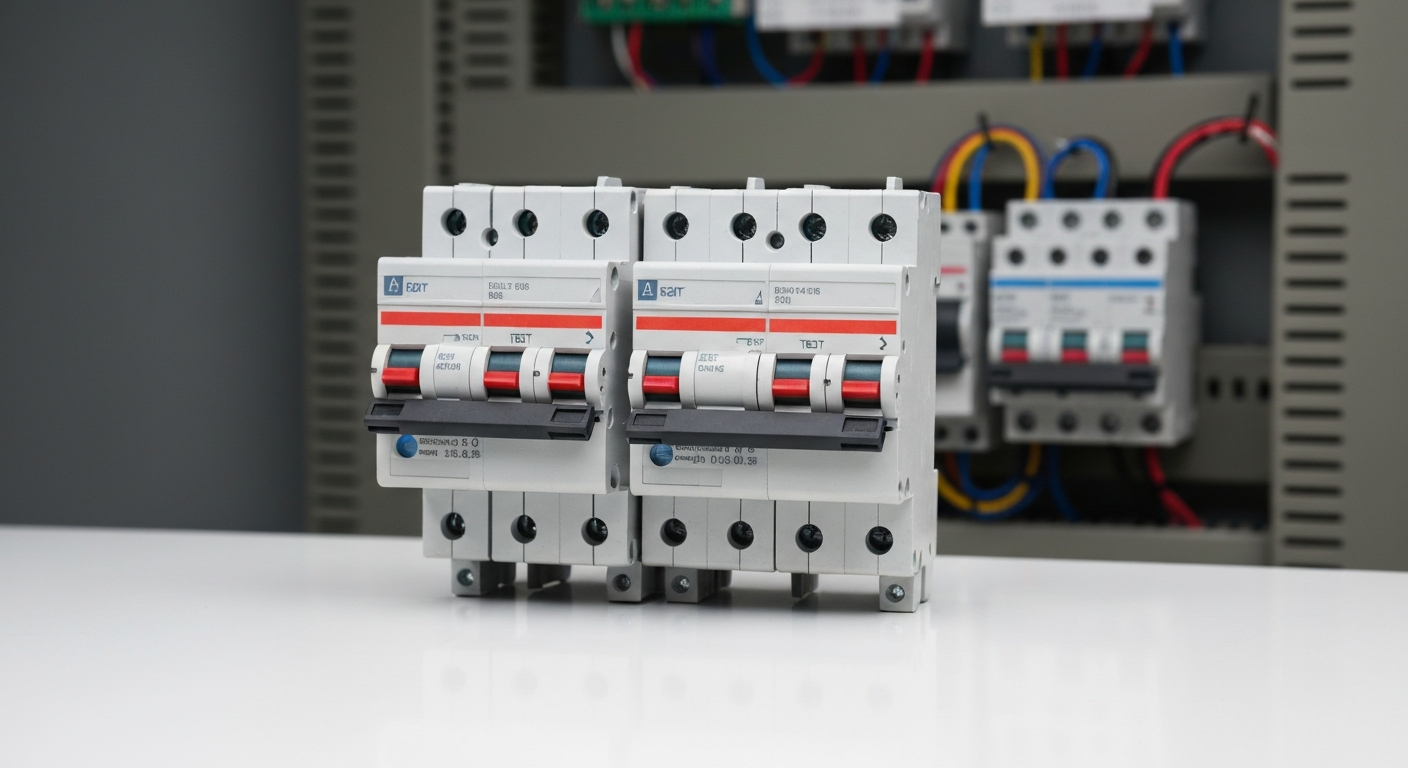
The solution came in the form of the Dual-Function (DF) circuit breaker, often labeled as “GFCI/AFCI” or “AF/GF” breaker. These innovative devices combine the protective capabilities of both a Ground-Fault Circuit Interrupter and an Arc-Fault Circuit Interrupter into a single unit that fits into a standard breaker slot in your electrical panel.
How They Work: A dual-function breaker incorporates the sophisticated electronics of both a GFCI and an AFCI. It continuously monitors the circuit for:
- Current Imbalance: Like a standard GFCI, it detects if the current flowing out on the hot wire doesn’t match the current returning on the neutral wire, indicating a ground fault.
- Arc Fault Signatures: Like a standard AFCI, it analyzes the electrical waveform for patterns indicative of dangerous series or parallel arc faults.
If either a ground fault (exceeding 4-6mA) or a hazardous arc fault is detected, the dual-function breaker will trip, cutting off power to the circuit.
Advantages of Dual-Function Breakers:
- Space-Saving: By combining two functions into one breaker, they save valuable space in crowded electrical panels, which is a significant benefit in modern homes with numerous circuits.
- Simplified Compliance: They make it easier to meet complex NEC requirements where both GFCI and AFCI protection are mandated on the same circuit, ensuring comprehensive safety from a single point of protection.
- Cost-Effective: While more expensive than a standard breaker, a dual-function breaker is often more economical than purchasing and installing separate GFCI and AFCI devices for the same circuit, especially if you consider the labor involved.
- Complete Circuit Protection: Unlike using a GFCI receptacle downstream from an AFCI breaker, a dual-function breaker at the panel provides both types of protection for the entire circuit, including all wires, outlets, and lights from the panel onward.
Identification: Dual-function breakers are clearly marked on their face with “GFCI/AFCI,” “AF/GF,” or similar labeling to distinguish them from single-function GFCI or AFCI breakers, as well as standard breakers. They typically also feature a “TEST” button, similar to a GFCI breaker, which allows for regular verification of their ground-fault detection capability.
For homeowners and electricians alike, dual-function breakers represent a practical and highly effective solution for achieving the highest levels of electrical safety and code compliance in areas requiring multifaceted protection.
How to Test Them Monthly
GFCI and AFCI breakers are critical safety devices, and like all safety equipment, they need to be regularly checked to ensure they are functioning correctly. Manufacturers and safety organizations strongly recommend testing these breakers monthly. This simple procedure confirms that the internal mechanisms are operational and will trip when a fault occurs.
Why Monthly Testing is Important: Over time, electrical components can degrade, or internal mechanisms can become sticky. Regular testing ensures that the breaker can still detect a fault and mechanically trip the circuit instantly. A non-functional GFCI or AFCI provides a false sense of security, leaving your home and family vulnerable to the very hazards they are designed to prevent.
How to Test a GFCI or AFCI Breaker (or Dual-Function Breaker):
- Locate the Breaker: Go to your main electrical panel. Identify the GFCI, AFCI, or Dual-Function breaker you wish to test. These breakers are typically larger than standard breakers and will have a small “TEST” button, usually colored white, yellow, or black.
- Ensure Power is On: Make sure the breaker is in the “ON” position and the circuit it controls is powered. You can confirm this by checking if a light or appliance on that circuit is working.
- Press the “TEST” Button: Firmly press the “TEST” button on the face of the breaker.
- Observe the Trip: The breaker should immediately move to the “OFF” or “TRIPPED” position. You might hear a distinct click. The power to the circuit it controls should also go off. This indicates the internal fault detection mechanism is working.
- Note: Some breakers, particularly newer ones, might have an indicator light that changes color or turns off when tripped.
- Reset the Breaker: To restore power, first push the breaker handle fully to the “OFF” position. Then, push it back to the “ON” position. The power to the circuit should be restored.
- Verify Power Restoration: Check the light or appliance you used in step 2 to confirm that power has been restored to the circuit.
What to Do if the Breaker Doesn’t Trip: If you press the “TEST” button and the breaker does not trip, it indicates that the GFCI or AFCI functionality is faulty. This means the breaker will not provide the intended protection in the event of a ground fault or arc fault. In this situation, the breaker needs to be replaced immediately.
What to Do if the Breaker Trips and Won’t Reset: If the breaker trips when you press the test button, but then refuses to reset (i.e., it immediately trips again when you try to turn it back to “ON”), this indicates a persistent fault on the circuit. This could be a wiring issue, a faulty appliance, or a problem with the breaker itself. In this case, you should unplug all devices from the circuit and try to reset it again. If it still won’t reset, it’s time to call a qualified electrician.
Safety Reminder: Always exercise caution when working near an electrical panel. Do not force breaker handles, and never attempt to open the main panel cover unless you are a qualified electrician. The purpose of this test is to verify the breaker’s function, not to troubleshoot complex electrical issues.
When to Call an Electrician
While understanding GFCI and AFCI breakers is valuable for every homeowner, working with them, especially within the main electrical panel, is not a task for the inexperienced or untrained. Electricity is inherently dangerous, and improper handling can lead to severe injury, electrocution, fire, or damage to your home’s electrical system. When in doubt, or for any task involving opening the main electrical panel, always call a qualified, licensed electrician.
Here are specific scenarios where professional help is not just recommended, but essential:
- Installation of New GFCI/AFCI/DF Breakers: Replacing a standard breaker with a GFCI, AFCI, or dual-function breaker involves working directly within the electrical panel, often with live components. This requires specialized tools, knowledge of wiring diagrams, and strict adherence to safety protocols to prevent accidental shock or improper installation. While some advanced DIYers might consult guides like our own on how to replace a circuit breaker, the complexities and inherent dangers of working within the main panel mean that for most homeowners, calling a qualified electrician is the safest and most prudent course of action.
- Frequent or Nuisance Tripping: If your GFCI or AFCI breaker frequently trips without an obvious cause (e.g., you haven’t dropped an appliance in water, or no cords are visibly damaged), it’s a sign of an underlying problem. This could be a faulty appliance, a wiring issue within the walls (such as a loose connection, damaged insulation, or even water intrusion), or a sensitive but correctly functioning breaker detecting a genuine, intermittent fault. An electrician can diagnose the root cause, which often requires specialized testing equipment to pinpoint the exact location of the fault.
- Breaker Fails the Monthly Test: If you perform the recommended monthly test and your GFCI, AFCI, or dual-function breaker does not trip when you press the “TEST” button, it is defective and needs to be replaced immediately. A faulty safety device provides no protection. An electrician can safely replace the breaker and ensure the new one is functioning correctly.
- Any Suspected Wiring Issues: If you notice signs of electrical problems such as flickering lights, burning smells, warm outlets, scorch marks, or buzzing sounds from your electrical panel or outlets, these could indicate serious wiring issues, including potential arc faults or ground faults. These symptoms warrant immediate professional investigation.
- Code Compliance Questions or Upgrades: If you’re undertaking a renovation, adding new circuits, or simply want to ensure your home meets the latest electrical safety standards, an electrician can provide expert advice. They are up-to-date on the latest NEC requirements and local amendments and can ensure your system is compliant and safe.
- General Electrical Work Beyond Simple Replacements: Even seemingly simple tasks like wiring a 3-way switch require careful attention to detail and safety protocols. For any electrical work that involves modifying permanent wiring, adding new circuits, or extending existing ones, a professional electrician ensures the work is done correctly, safely, and to code.
Remember, electricity is unforgiving. Taking shortcuts or attempting complex electrical work without proper training and experience can have dire consequences. Investing in a qualified electrician’s expertise is an investment in the safety and longevity of your home’s electrical system and, most importantly, the well-being of its occupants.
Frequently Asked Questions
Q1: Can I replace a standard breaker with a GFCI/AFCI myself?
A1: While it is physically possible for an experienced individual to swap a standard breaker for a GFCI or AFCI breaker, it is highly recommended to have a qualified, licensed electrician perform this task. Working inside an electrical panel exposes you to potentially lethal voltages, and improper installation can lead to serious hazards, including fire or electrocution. Electricians have the necessary training, tools, and safety equipment to perform the work correctly and safely, ensuring compliance with local codes.
Q2: Do I need both GFCI and AFCI protection on the same circuit?
A2: Yes, in many areas of the home, modern electrical codes (specifically the NEC) now require both GFCI and AFCI protection on the same circuit. This is particularly true for locations like kitchens, laundry rooms, and other general-purpose circuits in dwelling units. This dual requirement is because GFCIs protect against shock hazards from ground faults, while AFCIs protect against fire hazards from arc faults – two distinct dangers. Dual-function (DF) breakers are designed specifically to provide both types of protection from a single device in the electrical panel.
Q3: What’s the difference between a GFCI breaker and a GFCI receptacle?
A3: Both GFCI breakers and GFCI receptacles provide ground-fault protection, but they do so at different points in the circuit. A GFCI breaker is installed in the main electrical panel and protects the entire circuit it serves, including all outlets, lights, and appliances downstream from the breaker. A GFCI receptacle is an outlet with built-in GFCI protection. It protects itself and any other standard receptacles or devices wired to its “load” terminals downstream from it. The choice often depends on code requirements, circuit layout, and cost considerations.
Q4: My AFCI breaker keeps tripping. What should I do?
A4: If your AFCI breaker frequently trips, it’s detecting an arc fault, which is a serious safety concern. First, unplug all devices from the circuit. Try to reset the breaker. If it resets and holds, plug your devices back in one by one to identify which appliance or cord might be causing the arc. If the breaker trips even with nothing plugged in, the problem is likely within the fixed wiring of your home (e.g., loose connections, damaged insulation). In either case, if you cannot easily identify and remedy the cause (e.g., replacing a faulty lamp), or if the breaker continues to trip, you should immediately call a qualified electrician to diagnose and repair the issue.
Q5: Are GFCI/AFCI breakers required in older homes?
A5: Generally, GFCI and AFCI requirements in the NEC apply to new construction and significant renovations. Existing circuits in older homes are typically “grandfathered” in, meaning they don’t necessarily need to be upgraded to current code standards unless specific work is being done on those circuits. However, upgrading to GFCI and AFCI protection in an older home is a highly recommended safety enhancement. Many local codes may also require these protections during certain types of repairs, circuit modifications, or when selling a home after an inspection. Always consult your local building department or an electrician for specific requirements in your area regarding existing homes.